In short
The PR workshop for AI founders is practical PR training for AI startup founders and early operators. It covers category narrative over model specs, benchmark and claims discipline, mainstream tech versus trade press, founder visibility, funding announcements, AI search citations and trust and safety questions. It runs as a one-hour masterclass, a three-day workshop or a six-module course.
Which format fits: masterclass, workshop or course?
| Format | Length | Best for | Participants leave with |
|---|---|---|---|
| One-hour masterclass | 60 minutes | Guest lectures, conference sessions, team lunch-and-learns, accelerator demo weeks. | A 13-slide framework and a one-page plan. |
| Three-day workshop | 3 days, about 6 hours a day | Accelerator cohorts, leadership offsites, university immersion weeks, in-house comms teams. | An AI search baseline, a trust and safety Q&A, a recorded mock interview and a 90-day AI PR plan. |
| Multi-module course | 6 modules, usually one a week | Semester electives, cohort programs, founders who want to run their own PR after the course. | A launch or funding pack for one real announcement: narrative one-pager, claims sheet with evidence, two media lists, two pitches, a release draft, an AI search baseline and a trust and safety Q&A. Shilika reviews each pack line by line, starting with the claims. |
What will participants be able to do?
- Replace a spec-led pitch with a category narrative a non-technical reporter can repeat.
- Build a claims sheet that backs every benchmark, accuracy figure and "first" with evidence you would show a journalist.
- Turn one announcement into two pitches: one for mainstream tech press, one for trade press.
- Plan 90 days of founder interviews, podcasts, commentary and a funding announcement around one narrative.
- Check what ChatGPT, Perplexity and Google AI Overviews say about your category and fix the sources they pull from.
- Answer trust and safety questions on data, privacy, errors and misuse in writing before a reporter asks.
Why learn this from Shilika Jain?
- Ran founder-led visibility for GAIA from Dec 2024 to Apr 2025: podcasts and interviews that compounded into Forbes, Decrypt and Benzinga.
- Placed Fluence co-founder Tom Trowbridge as a DePIN voice, from a CoinDesk op-ed in April 2025 to newsjacking the global Microsoft outage in e27.
- Sat on the other side of the table too, interviewing founders for CryptoDaily UK at TOKEN2049 and Solana Breakpoint in 2024.
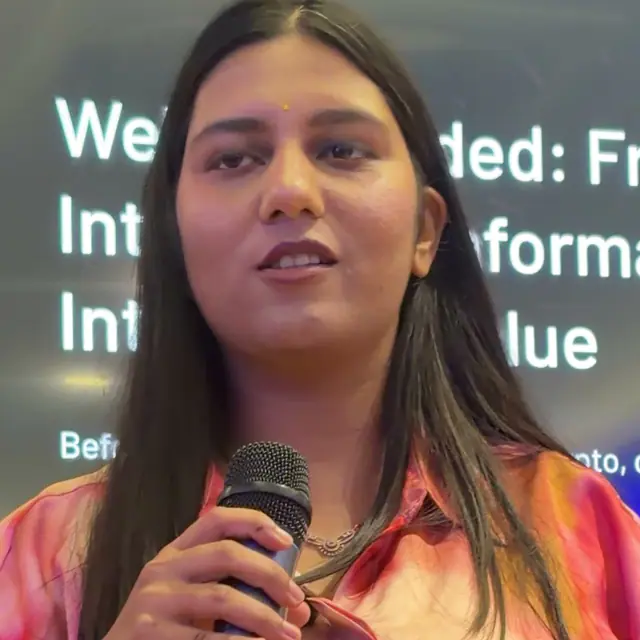
- Ran a PR workshop for the XRPL Labs Accelerator with Tenity (Jul 2025) and advised founders on PR while judging a Stellar cohort run by Myosin (May 2026).
So many AI companies raise big rounds and still have bad PR.
Format 1 · 60 minutes
One-hour masterclass: the slide-by-slide outline
One deck that moves an AI founder from "we have a great model" to a one-page PR plan a reporter would take seriously. Built for accelerator demo weeks and founder sessions where the room has an hour and a launch coming up.
Format 2 · 3 days
Three-day workshop: the day-by-day agenda
Three days that end with an AI founder holding a narrative one-pager, a claims sheet, two media lists, a funding announcement draft and a trust and safety Q&A. Built for AI accelerator cohorts and founding teams with a raise or launch inside the next quarter.
Day 1: Narrative and claims discipline
| Time | Session |
|---|---|
| 09:30 to 11:00 | How AI news gets made. What a tech reporter filters for in the first few lines, why spec-led pitches go unanswered, and how earned, sponsored and paid placements differ. Bullieverse is the warning: its CoinDesk piece was sponsored, not earned. |
| 11:15 to 12:45 | Category phrase lab. Each founder writes the phrase they want reporters and AI engines to attach to their company. The room checks it against what outlets already cover and cuts anything nobody searches for. |
| 13:45 to 15:15 | Claims audit. Go through the website, deck and launch copy line by line. Flag every "first", "only", benchmark and accuracy figure, then attach evidence or cut it. |
| 15:30 to 17:00 | Benchmark disclosure. Write a short methods note for your headline result: test set, date, baseline and limits. Then explain the result to a non-technical reporter in two sentences. |
End of day 1: A narrative one-pager and a claims sheet with evidence behind every number you plan to say in public.
Day 2: Press, founder voice and funding
| Time | Session |
|---|---|
| 09:30 to 11:00 | Two press maps. Build a mainstream tech list (TechCrunch, The Information, VentureBeat, Forbes) and a trade list for your sector from the bylines of the last 90 days. Note each reporter's last relevant story. |
| 11:15 to 12:45 | Founder visibility plan. Use GAIA as the worked example: interviews, podcasts and commentary from Dec 2024 to Apr 2025 around one narrative. Map your own 90 days of appearances the same way. |
| 13:45 to 15:15 | Funding announcement clinic. Pick the angle beyond the round size, decide between an exclusive and a wide release, set the embargo, and decide what investor and customer quotes add. Write the first paragraph until it stands alone. |
| 15:30 to 17:00 | Reactive commentary. Take this week's biggest AI story and write a 100-word expert comment a reporter could quote today. Fluence and Magna show how commentary on someone else's news earns a slot. |
End of day 2: Two tiered media lists, a 90-day founder visibility calendar and a funding announcement draft.
Day 3: AI search and trust
| Time | Session |
|---|---|
| 09:30 to 11:00 | AI search baseline. Ask ChatGPT, Perplexity and Google AI Overviews the questions your buyers ask about your category. Record who gets named and which sources get cited. |
| 11:15 to 12:45 | Citable pages. Rewrite the homepage, about page and FAQ answer-first. Align the category phrase across founder bios, profiles and press kit so every source says the same thing. |
| 13:45 to 15:15 | Trust and safety press drill. A mock interview on training data, privacy, wrong outputs, misuse and jobs, with investigative follow-ups. Each founder reviews the recording against their written answers. |
| 15:30 to 17:00 | 90-day AI PR plan. Sequence three stories, set who signs off on claims and quotes, and agree the numbers that show PR is working: AI search citations, inbound from buyers and investor replies. |
End of day 3: An AI search baseline, a trust and safety Q&A, a recorded mock interview and a 90-day AI PR plan.
Format 3 · 6 modules
Six-module course: decks, activities and quizzes
Six modules, each with its own deck, a hands-on activity and a three-question quiz. AI founders finish with a capstone: a launch or funding pack reviewed line by line, with every claim checked.
Cadence: 6 weekly modules. 90 minutes live, plus about 2 hours of activity work per week.
Module 1: Category narrative over model specs
Deck 1: Why reporters skip the spec sheet
Why AI pitches that lead with parameters, architecture or benchmark tables rarely get answered, and how to replace them with a category narrative. Uses GAIA's decentralized AI agents narrative as the worked example.
Activity: Collect the last ten AI stories in your category. For each, write down the phrase the reporter used to describe the category and whether any spec appeared above the fold. Then draft your own category phrase.
Quiz
1. Which pitch opening is most likely to get a reply from a mainstream tech reporter?
Show answer
A. The customer problem the product removes and who has it A mainstream reporter writes for readers who care what changes for them. Specs can support the story, but they rarely open it.
2. What is a category narrative?
Show answer
C. A phrase and an argument about where the market is going that the company wants to be named for A category narrative gives reporters and AI engines a slot to put you in. Features change every release; the category argument holds.
3. What was GAIA's coverage organized around?
Show answer
D. One narrative, decentralized AI agents, with node count as proof One consistent narrative plus one checkable number gave reporters across Forbes, Decrypt and Benzinga the same story to build on.
Module 2: Benchmarks and claims discipline
Deck 2: Benchmarks, demos and the words that get fact-checked
How to talk about benchmarks, accuracy and demos without overclaiming. Covers the words that trigger scrutiny, how to write a methods note, and what to do when a reporter asks for evidence you can't share.
Activity: Audit your website, deck and last announcement. List every claim with a number or a superlative, attach the evidence, and rewrite or cut each claim you can't support.
Quiz
1. You beat a competitor on one public benchmark. What is the most defensible way to say it?
Show answer
B. The score, the benchmark, the test date, the models compared and the known limits A specific, dated, scoped claim survives a fact-check. A superlative invites someone to find the test you lose.
2. Which word in a launch release is most likely to draw a fact-check?
Show answer
C. "First" "First" is a factual claim a reporter can disprove with one search. Use it only with proof ready to send.
3. A reporter asks for the evaluation set behind your accuracy figure, and you can't share it. What is the best response?
Show answer
A. Explain what you can share (method, size, date) and why the rest stays private Being open about method and honest about limits keeps trust. Silence or pressure usually ends up in the story.
Module 3: Mainstream tech press vs trade press
Deck 3: Two press maps for one announcement
What mainstream tech outlets such as TechCrunch, The Information, VentureBeat and Forbes look for, how that differs from sector and developer trade press, and how to cut one announcement into two pitches.
Activity: Build two lists of 15 reporters each from bylines in the last 90 days. Write one pitch for each list on the same news and compare what changed.
Quiz
1. Your news is an inference speed-up that matters mostly to developers. Where does the first pitch go?
Show answer
D. A trade or developer publication, or a reporter who covers AI infrastructure Technical news lands first where readers understand why it matters. Wider coverage can follow once there is a story about the market.
2. What does a mainstream tech reporter usually need that a trade reporter might not?
Show answer
B. Market context, why now, who pays, and a founder who speaks plainly Mainstream readers need the business story. The technical detail supports it but rarely carries it.
3. What is the best source for an AI media list?
Show answer
A. Reporters who wrote about your category in the last 90 days A reporter who covered your category recently already has a reason to care. Generic lists produce generic silence.
Module 4: Founder visibility
Deck 4: Interviews, podcasts and commentary that compound
How a steady run of founder interviews, podcasts and quick commentary builds the body of work tier-1 reporters look for. Walks through GAIA from Dec 2024 to Apr 2025 and the Fluence and Magna newsjacking examples.
Activity: Plan 90 days of founder appearances around your category phrase: target podcasts, two op-ed ideas and a list of news events you could comment on. Write one 100-word comment on this week's AI news.
Quiz
1. Why did GAIA's founder interviews compound into tier-1 coverage?
Show answer
C. A steady cadence of interviews around one narrative that reporters could find Each interview added to a searchable record of the founder saying the same thing well. Reporters build on that.
2. A major model launch dominates today's news. What is the best move for an early AI founder?
Show answer
D. Send a short, specific expert take to reporters covering it, within hours Reporters need informed voices on the day. Magna's Worldcoin commentary got a B2B brand into Decrypt this way.
3. Which podcasts tend to help an early AI founder most?
Show answer
B. Shows whose listeners are your buyers, investors or developers Fit beats reach early on. A small show your buyers listen to does more than a big one they skip.
Module 5: Funding announcements and launches
Deck 5: Raises and launches that run longer than a day
How to give a funding round or launch an angle beyond the number, when to offer an exclusive, how embargoes work, and why earned and sponsored placements are not the same result.
Activity: Draft the announcement for your next raise or launch: angle, target outlet for an exclusive, embargo time, first paragraph and two quotes that each say something new.
Quiz
1. Which funding angle gives a reporter the most to work with?
Show answer
C. The round, the specific problem it funds and one proof point or market angle MANTRA's $11M ran wider because it carried a category word and a regional angle. A number alone is a one-day story.
2. Why does it matter whether a funding story was earned or sponsored?
Show answer
A. Sponsored pieces are labelled and carry less weight with readers, investors and editors Bullieverse's raise ran in Economic Times and Inc42, while its CoinDesk piece was sponsored content. Know which is which before you quote either in a deck or a pitch.
3. When does offering an exclusive make sense?
Show answer
D. Offer it to the single best-fit outlet, then go wider after it runs An exclusive is a private offer to one reporter. Offering it to several, or after a public release, removes what made it worth taking.
Module 6: AI search citations and trust and safety questions
Deck 6: Getting cited by AI engines and answering the hard questions
How ChatGPT, Perplexity and Google AI Overviews decide whom to name, how GEO and AEO work for an AI startup, and how to prepare written answers on data, privacy, errors and misuse before a reporter asks.
Activity: Run an AI search baseline on five category questions and log the sources cited. Then write a one-page trust and safety Q&A and test it in a mock interview.
Quiz
1. What is a sensible first step in GEO or AEO for an AI startup?
Show answer
B. Ask AI engines your category questions and record which sources they cite You can't fix what you haven't measured. The cited sources show which outlets and pages to earn or improve.
2. An investigative journalist has emailed three times with specific questions about your training data. What should you do?
Show answer
A. Answer sooner rather than later with what you can confirm, in writing Repeated, specific questions mean the story is being written. A clear, early answer is your best chance to shape it.
3. Which habit most helps AI engines name your company for a category query?
Show answer
C. The same category phrase across your site, bios and earned coverage AI engines name companies that many credible sources describe the same way. Consistency is what they can ground an answer on.
Capstone: A launch or funding pack for one real announcement: narrative one-pager, claims sheet with evidence, two media lists, two pitches, a release draft, an AI search baseline and a trust and safety Q&A. Shilika reviews each pack line by line, starting with the claims.
How does it change for students, C-suite and operators?
For students
For computer science, business and journalism students the program uses public AI launches and the GAIA case study instead of their own company. The capstone is a claims sheet and press plan for an AI startup they pick, with extra time on how tech reporters verify claims.
For c-suite
For AI company executives the list-building sessions shrink and claims sign-off, trust and safety interview drills and funding announcement roles grow. The prep mirrors the founder interview work behind GAIA and Fluence, and the capstone is a recorded interview plus a claims approval process.
For founders & operators
For AI founders and first comms hires every exercise uses their own product, benchmarks and target outlets. They leave with a claims sheet, two pitches ready to send and a funding or launch draft.
Frequently asked questions
What does a PR workshop for AI founders cover?
Category narrative over model specs, benchmark and claims discipline, mainstream tech versus trade press, founder visibility, funding announcements, AI search citations and trust and safety questions from reporters. Each session uses the founder's own company.
How is PR for AI startups different from general startup PR?
AI founders face more fact-checking on benchmarks and claims, tougher questions on data and safety, and buyers who research through ChatGPT and Perplexity. The workshop spends most of its time on those three problems.
Can PR training help my AI startup show up in ChatGPT answers?
It teaches you to measure what AI engines say about your category, which sources they cite, and how to make your pages and coverage easier to cite. Results depend on your coverage and consistency over time.
Will the workshop get my AI startup into TechCrunch?
No workshop can honestly promise placement. You leave with pitches built for the right reporters and claims that hold up. Coverage depends on your news and your timing.
Is the AI founder PR workshop online or in person?
Both. The one-hour masterclass and the six-module course work well online. The three-day workshop works best in person, for example inside an accelerator week or a team offsite.
How is the PR workshop for AI founders priced?
Pricing is quoted per cohort, based on format, group size and location. Student and non-profit sessions are often considered pro bono. Book a call to scope it.
Where has Shilika taught and spoken?
- Aug 2026: Spoke to students at SJCC, Bengaluru, on Web3 and blockchain.
- May 2026: Judged a Stellar founder cohort run by Myosin and advised founders on PR strategy.
- Jul 2025: Ran a PR workshop for the XRPL Labs Accelerator with Tenity, for PayFi and tokenisation founders.
- Jan 2025: Invited to speak at an IIT event.
- Dec 2024: Moderated the PR panel at India Blockchain Week.
- Dec 2024: Spoke on "Mastering the ABCs of Web3 PR" at India Blockchain Week 2024.
Related reading and other programs
Book this program
Run it for your cohort, class or team.
Pick a format, share the group size and dates, and Shilika will tailor the decks, exercises and quizzes. Pricing is quoted per cohort. Student and non-profit sessions are often considered pro bono.
Book a 30-min scoping call