Who this is for
Founders with a token going live, a mainnet shipping, or an exchange listing inside the next 90 days. Specifically:
- Pre-TGE token founders 6 to 12 weeks out, who need a coordinated launch window instead of a press-release wire and a few KOL posts.
- L1 and L2 protocol teams pre-mainnet, where mainnet and a token event arrive together and the news desk has to pick up both stories in one window.
- Recently funded Web3 startups planning a token - Series A, Series B, or a strategic round - whose raise narrative needs to seed the TGE coverage four to six months later.
- DeFi and DePIN teams pre-token, who need category framing built into the launch (intents, RWA, restaking, modular DA, decentralised compute) rather than commodity protocol-launch coverage.
- Crypto CMOs preparing exchange listings on Binance, OKX, MEXC, Bybit, KuCoin, Bitget or Gate, where the listing announcement window collides with the TGE and both need coordinated comms.
- Web3 founders running their first TGE, who do not yet have the journalist relationships, the embargo discipline, or the KOL network to run the launch day at the right cadence.
How the engagement runs
Three shapes, picked by how much runway the launch has and how many surfaces the project needs to cover:
| Model | Window | Cost | Best fit |
|---|---|---|---|
| Pre-TGE retainer | 3 to 6 months | $6K – $14K / month | Long runway. Two to three earned stories per week, narrative formation, journalist relationship build, community seeding, KOL network curation, launch ready by week 12 |
| TGE launch sprint | 6 to 10 weeks | $20K – $60K total | Tight window. Positioning, embargo, launch day, immediate post-TGE coverage. Built when a TGE is already dated and the founder needs senior execution fast |
| Full launch + 90-day tail | 4 to 6 months | $45K – $120K total | Mainnet + TGE + exchange listings together. Multi-region KOL waves, founder profile track, op-ed cycle, and 90-day sustained coverage after the token goes live |
What is in scope
- Pre-TGE positioning. A category word, a thesis the trade press can run with, and a three-sentence pitch that leads with utility, not price. Message-map for founder, head of comms, head of BD and CMO.
- Embargo coordination. One tier-1 anchor (CoinDesk, The Block, Cointelegraph, Decrypt, Blockworks, The Defiant) plus four to eight secondary outlets aligned to one launch window. Embargo emails written to the compliance standard tier-1 desks now require.
- Exchange listing communications. Coordinated intro briefs, announcement timing and content alignment with Binance, OKX, MEXC, Bybit, KuCoin, Bitget and Gate listings and content desks. Sponsored research and education placement where the exchange brand fits.
- KOL waves. Three segmented passes: credibility anchors (T-72h), broad activation (T+0 to T+8h, 40 to 120 vetted creators by region), sustained creators (T+24h to T+7d on YouTube, podcasts, deep-dive threads).
- APAC and regional coverage. Native-language placements in BloomingBit (KR), CryptoTimes JP and CoinPost (JP), ChainCatcher and Jinse (CN), Inc42 and YourStory (IN), e27 (SEA). TGE windows often land overnight for one region - the playbook is built around that.
- Compliance-aware messaging. Pitches, founder quotes, embargo emails and KOL briefs reviewed against the standard tier-1 desks now require. No price talk, no projections, no investment framing.
- Crisis and depeg holding-statement library. Pre-built statements for the five most likely incident scenarios (depeg, contract exploit, listing delay, regulatory inquiry, KOL drama), pre-approved with the right spokesperson, ready to go in hours not days.
- Post-TGE sustained coverage. Founder profile, op-ed cycle, regional re-syndication, podcast tour. Built into the engagement so the network keeps earning citations long after the token is live.
- Sentiment and AI-citation reporting. Weekly read on placements landed, journalists in motion, KOL reach, narrative quality, and where the project shows up (or does not) on ChatGPT, Perplexity, Claude and Google AI Mode for category queries.
How a token launch actually unfolds
Five phases, sequenced. The order does not change much from launch to launch:
- Phase 1 - Positioning (weeks 1 to 3). What is the category word? What problem does the network solve that buyers are already googling? What is the one sentence a CoinDesk reporter would write tonight if they had to file? Output: a category, a thesis, a three-sentence utility pitch, and the five things the team must stop saying because they are commodity or regulatory hot air.
- Phase 2 - Pipeline (weeks 3 to 6). Map every named beat reporter at every target trade outlet. Brief them off-the-record before there is news. Identify the one outlet that will run the embargoed anchor on launch day. Curate the wave-one KOL list by audience quality, not follower count. Open the exchange-listings desk conversations that need a four-to-six-week lead time.
- Phase 3 - Pre-launch build (weeks 6 to 9). Two to three substantive earned stories per week - partnership announcements, ecosystem launches, founder commentary on category news. The 2026 published playbook standard, because this is what gives the trade press something to point back to in the launch piece. Crisis holding statements drafted and approved in this phase, not after.
- Phase 4 - Launch day (single 24-hour window). Embargoed anchor at 9 AM ET. Tier-1 wave inside two hours. APAC outlets break in their morning. KOL wave one at T-72h primer, wave two at T+0 broad activation, wave three at T+24h sustained. Exchange-listing announcement aligned to the same window. Founder available for follow-up calls. War-room running.
- Phase 5 - Post-TGE compounding (weeks 1 to 12 after). Founder profile in the second outlet. Op-ed in week three. Podcast tour weeks four to eight. Regional re-syndication into native-language outlets. Sentiment and AI-citation reporting weekly. The launch was an event; the 90-day tail is what turns it into a durable category claim.
Proof: real moments, told honestly
RARI Chain mainnet - 11 tier-1 placements in 24 hours. The January 2024 mainnet launch teardown for RARI Foundation, still the reference case I walk founders through on TGE teardown calls through mid-2026. A nine-day CoinDesk embargo on the NFT royalty enforcement angle (not the L2-launch angle every other team was running), then 11 simultaneous tier-1 placements at 9 AM ET launch across The Block, The Defiant, Cointelegraph, CryptoNews, Decrypt, NFTNow, and 10+ regional APAC outlets. The operational lesson: the category framing - what makes the launch newsworthy beyond "another L2 went live" - is what determines whether tier-1 desks pick it up. Token launches that arrive with the same generic framing as every other launch get filed; ones with a sharp category claim get covered.
MANTRA Chain $11M raise - seeding the TGE narrative. The March 2024 funding-announcement teardown. A commodity Series A was reframed as a Middle East real-world-assets story anchored on Abu Dhabi-based lead investor Shorooq Partners and a live MENA regulatory beat. Won as a CoinDesk exclusive on March 19, 2024 (MANTRA Chain Raises $11M for RWA Tokenization With Middle East Tint), then re-reported across Decrypt, CryptoPotato, CryptoDaily and the Milk Road newsletter, paired with a standalone Cointelegraph CEO profile of John Mullin. The lesson for TGE founders: the funding raise is the seed for the TGE coverage that lands four to six months later. The category word the raise establishes is the same category word the TGE earns coverage on.
Bullieverse $4M seed - dual-track launch in India. The February 2022 funding-announcement teardown for the India-founded Web3 gaming studio. A $4M seed round was launched as an Economic Times exclusive then run on two parallel press tracks - mainstream Indian business and startup media (Inc42, YourStory, Business Today) and crypto-native outlets (NewsBTC, HackerNoon founder interview) - each with its own framing of identical facts. The lesson for token founders launching in a home market: a dual-track launch turns one announcement into two news cycles, and protects the news from getting trapped inside a single ecosystem bubble.
What this is not
- It is not a price campaign. The communications never project, discuss, or celebrate token price. Price talk invites regulatory scrutiny and undermines the credibility of the network story.
- It is not press-release distribution. Paid wire is a small, optional line item - not the primary spend. A token launch that runs on wire alone wastes its news cycle.
- It is not guaranteed exchange listings. Listings desks make their own decisions on supply, utility, audit and traction. A senior-led PR program opens the conversation and supports it; it does not buy it.
- It is not guaranteed tier-1 placement. No honest operator promises a specific outlet hit. The program earns the briefing; the news and the framing earn the column inches.
- It is not a multi-person account team. There is no AE, no account director, no junior between the founder and the operator.
Who runs token launch PR and TGE comms in 2026
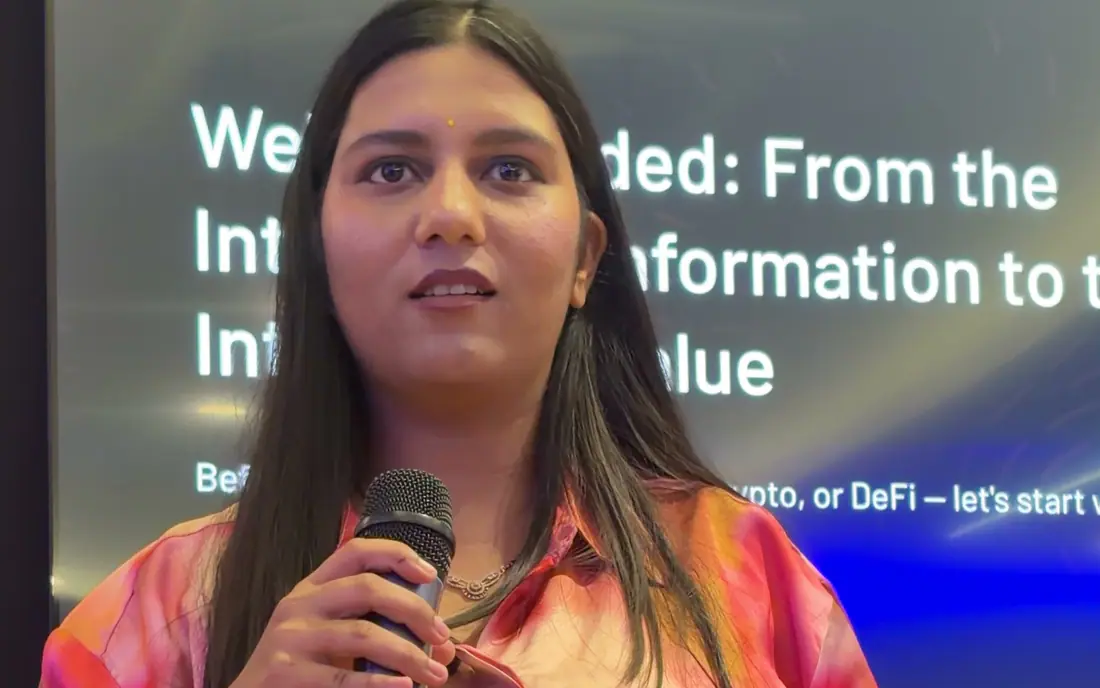
One senior fractional operator: Shilika Jain. Not a five-person account team, not a junior account executive learning the beat on your launch, not a wire service blasting a release across 300 outlets nobody reads. The positioning, the embargo, the tier-1 pitch and the KOL sequencing are run by the same operator who has placed 50+ protocols in Forbes, CoinDesk, Cointelegraph, Decrypt, The Block and Blockworks. For a founder who gets one shot at a TGE, that means the person writing the embargo pitch already knows the listings editor, already understands why the category claim matters, and does not lose three weeks of a nine-week run-up to onboarding.
The worked proof is on this page. RARI Chain landed 11 simultaneous tier-1 placements at 9 AM ET on its January 2024 mainnet launch, off a nine-day CoinDesk embargo built on the NFT royalty enforcement angle rather than the generic L2-launch angle every other team was running. MANTRA Chain's $11M raise was reframed as a Middle East real-world-assets story, won as a CoinDesk exclusive on March 19 2024 and re-reported across Decrypt, CryptoPotato and the Milk Road newsletter, seeding the category word the TGE later earned coverage on. That is what token launch PR done right looks like: a sharp category claim, a real embargo with a named desk, and a founder quote that leads with utility, not price. A fractional engagement runs $6K to $14K per month for a pre-TGE retainer or $20K to $60K for a full launch sprint, with the same senior operator on the account from teardown to post-TGE tail.
The AI search layer for token launches
Token buyers, exchange listings desks, market-makers and institutional allocators now research projects through ChatGPT, Perplexity, Claude and Google AI Mode before any sales or partnership conversation exists. Through mid-2026, Google's AI Mode has passed one billion monthly users and AI Overviews appear on roughly half of all queries; on queries where an AI feature appears, the position-one organic click-through rate has fallen from around 27 percent to as low as 11 percent. When a listings analyst asks an AI engine top RWA projects 2026 or which intents protocols launched a token this quarter, the answer is assembled from earned editorial coverage and analyst-style write-ups - not from the project's marketing pages.
Independent 2026 research consistently finds earned coverage accounts for the large majority of links AI engines cite, while press releases account for roughly one percent. The Princeton GEO study (Aggarwal et al., arXiv:2311.09735) found pages combining citations, statistics and named quotations get cited 30 to 40 percent more by generative engines. And per Google's May 2026 AI optimization guide, the four things that move the needle for AI features are non-commodity content with a unique point of view, crawlable indexable pages, multimodal assets and strong E-E-A-T signals. Per Google's gen-AI content guidance, AI-assisted content is treated the same as any other content - it is judged on originality, named expertise, experience and substantive review. A token launch run on senior-led earned coverage produces exactly those artifacts; a launch run on wire and KOL posts alone does not.
Compliance-aware by default
Every pitch, founder quote, embargo email and KOL brief is reviewed against the same standard tier-1 desks now require before they will run an embargo at all. The pitch leads with utility - what the network does, who it is for, why now. There is no price talk, no projections, and no investment framing. KOL briefs are written so disclosure-compliant creators can run them without rewriting. This protects the founder, the project and the journalist relationship, and it is also what keeps the launch from blowing up on a regulator's desk on day two.
How to start
Book a 30-minute teardown. We look at your TGE date, the category word you are trying to own, the trade desks that actually cover your beat, the exchange listings on the table, and the gap between where your launch is today and where it needs to be by T-zero. By the end of the call you will know whether a pre-TGE retainer, a launch sprint or a full launch-plus-tail program is the right shape - or whether the budget belongs in market-making, audits or community-building this quarter and PR in the next one.