Who this is for
Cybersecurity founders, CMOs, and CISOs who have a real product and real threat data, but whose category presence does not match it. Specifically:
- Pre-Series A security founders building in SASE, XDR, CTEM, identity, cloud security, application security, or AI security, who need analyst awareness and a tier-1 placement around a funding announcement or a flagship threat report.
- Series A and B security CMOs paying a traditional agency $20K to $35K per month - where the median Series B retainer now sits near $23,500 - who want senior-operator scope without the account-team markup.
- Recently funded cybersecurity companies with no in-house comms beyond the launch release, where the next two quarters decide whether analysts and journalists treat the company as a category contender.
- Threat-research teams sitting on genuinely novel data - a botnet teardown, a CVE, an incident-response dataset - that is being published as a blog post nobody outside the company reads.
- Security vendors that are invisible in AI search. When a buyer asks ChatGPT or Perplexity "best vendors for X", the company is not in the answer - and does not know why.
How the engagement runs
Three core models, picked based on stage and the news ahead:
| Model | Window | Cost | Best fit |
|---|---|---|---|
| Fractional retainer | 3 to 12 months | $3K – $7K / month | Steady threat-research cadence, ongoing analyst relations, founder profiling, AI-search visibility work |
| Analyst relations sprint | 8 to 12 weeks | $12K – $28K total | A Magic Quadrant or Forrester Wave briefing cycle, a category-entry push, or repairing a weak analyst position |
| Launch / disclosure sprint | 4 to 8 weeks | $15K – $40K total | Funding round, a major CVE or coordinated disclosure, a flagship threat report, an RSA or Black Hat news moment |
What is in scope
- Analyst relations. Briefing calendar mapped to the Magic Quadrant and Forrester Wave cycles for your category; vendor briefing decks written to the questions analysts actually ask; inquiry sessions with Gartner, Forrester, IDC and KuppingerCole; an objection feedback loop into product and messaging.
- Tier-1 security press outreach. Dark Reading, SC Media, CyberScoop, The Record, SecurityWeek, BleepingComputer, Help Net Security, plus the security desks at Forbes, WSJ Pro Cybersecurity, Bloomberg, TechCrunch and Wired - and named beat reporters, not a blast list.
- Threat-research amplification. Turning your team's CVE work, botnet teardowns, and incident data into publishable, attributed stories that journalists run and analysts cite.
- Coordinated disclosure communications. A disclosure-timeline template aligned to coordinated-disclosure norms, holding statements, and an outlet map so a CVE release lands as a credibility moment, not a scramble.
- Breach and crisis comms. Pre-built holding-statement library, named-spokesperson and approval chain, and a journalist contact map - rehearsed before it is needed.
- Founder and CISO profiling. LinkedIn rebuild, op-ed ghostwriting, podcast and conference-stage placement at RSA Conference, Black Hat and BSides.
- AEO and AI-search visibility. Structuring earned coverage and on-site content so AI engines cite the vendor on category queries.
- Weekly asynchronous reporting. Placements landed, analyst briefings booked, journalists in motion, AI-citation share - not vanity metrics.
Analyst relations is the part most security PR skips
In most categories, PR is about journalists. In cybersecurity, the buyer's shortlist is shaped first by Gartner, Forrester, IDC and KuppingerCole. A security PR program that cannot name the analyst who covers SASE, the one who covers XDR, and the one who covers identity is not a real program - it is media relations wearing a security badge.
Analyst relations is not a relationship monopoly; it is structured work. The deliverable is a briefing calendar built backwards from the Magic Quadrant and Wave research cycles for your category, a briefing deck written to the analyst's research agenda rather than your launch deck, inquiry sessions used to surface objections early, and a feedback loop that carries those objections back into product and messaging before the next briefing. A fractional operator runs that process directly, with the founder in the room. What an honest operator never promises is a guaranteed quadrant position - analysts score the product, not the pitch.
Threat research is your news engine
Security journalists at Dark Reading, CyberScoop and The Record do not publish product announcements. They publish threat intelligence: a new malware family, a botnet teardown, a vulnerability class, incident-response data nobody else has. Most security startups are already sitting on this - and burying it in a blog post with no outreach behind it.
The work is to treat the research team as the newsroom. Every quarter has a flagship research artifact. Every artifact gets a real embargo, a named researcher as the spokesperson, a tier-1 anchor outlet, and a syndication plan. That is how a vendor becomes a name a journalist calls for comment on the next big story in the category - which is worth far more than any single launch.
Proof: the closest case, told honestly
Cybersecurity PR is an expanding part of this practice, built on six years of infrastructure and security-narrative work in Web3 and AI - categories where the news is technical, the buyer is skeptical, and trust is the entire product. The most security-adjacent case study is Web3Auth: an MPC wallet-infrastructure company whose news - key-management security delivered as a developer SDK - had no funding hook and no token, the kind of release tier-1 desks routinely ignore. It was reframed as a trusted-infrastructure story, anchored to the Google Cloud x Firebase partnership, and placed across Blockworks, CoinDesk, Benzinga, Cointelegraph and Yahoo Finance, then syndicated into three more language markets.
That is the same muscle cybersecurity PR runs on: take a deeply technical security capability, translate it into an outcome a journalist and an analyst both understand, anchor it to verifiable proof, and place it with named reporters on a timed plan. The honest version of this page: if you need a decade of named Gartner Magic Quadrant wins on the table before you will hire, this is not your fit. If you want a senior operator who will build the analyst calendar, run the threat-research newsroom, and own AI-search visibility - without the agency markup - book the teardown.
What this is not
- It is not press-release distribution. Paid wire is a separate line item and rarely the right spend for a security startup.
- It is not a multi-person account team. There is no AE, no account director, no junior between the founder and the operator.
- It is not a guaranteed analyst rating. No honest operator promises a Magic Quadrant position; the program earns the briefing, the product earns the score.
- It is not generic tech PR. Analyst relations, threat-research amplification, and disclosure comms are security-specific and in scope from day one.
Who runs cybersecurity PR for startups in 2026
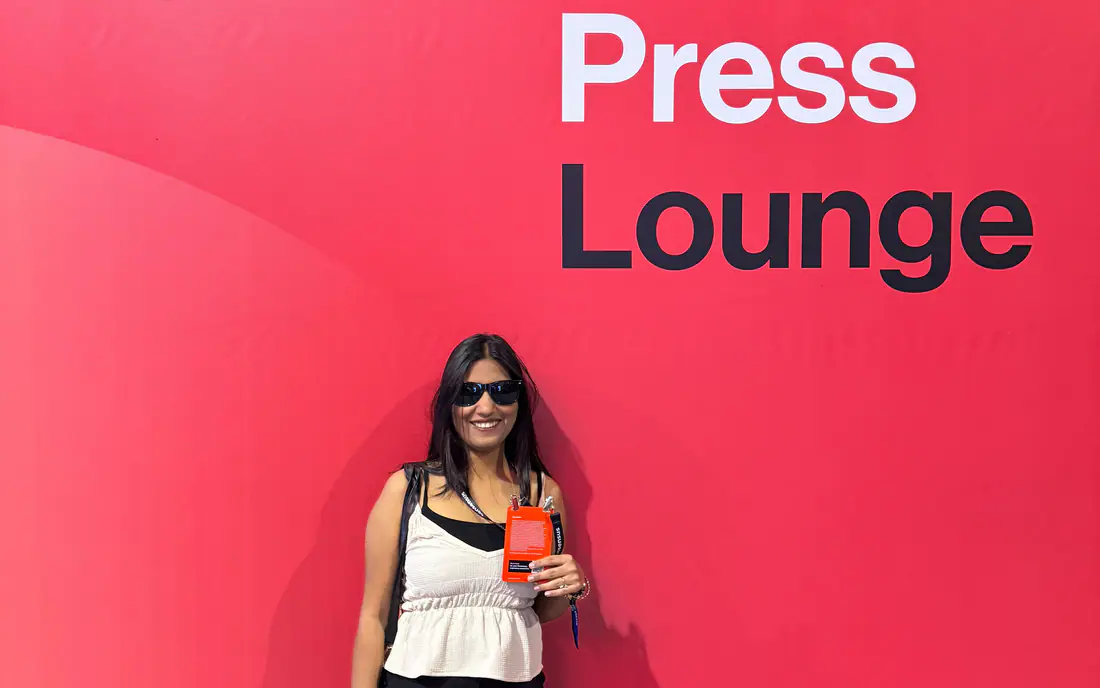
Cybersecurity PR here is run by one senior operator, Shilika Jain, working directly with the founder, CMO or CISO on a fractional retainer. There is no account team, no AE, and no junior between you and the person doing the work. That is deliberate: analyst relations, threat-research amplification, disclosure comms and AI-search visibility are judgment calls that do not survive being handed down a chain. The practice is built on six years of infrastructure and security-narrative work in Web3 and AI, categories where the news is technical, the buyer is skeptical, and trust is the entire product. The most security-adjacent proof, told honestly, is Web3Auth: an MPC wallet-infrastructure company whose key-management security was reframed as a trusted-infrastructure story and placed across Blockworks, CoinDesk, Benzinga, Cointelegraph and Yahoo Finance. If you need a decade of named Gartner Magic Quadrant wins on the table before you will hire, this is not your fit. If you want a senior operator who builds the analyst calendar, runs the threat-research newsroom and owns AI-search visibility without the agency markup, it is.
For a cybersecurity startup breaking into the US market, the work is US-facing by design. The analyst firms that shape US buyer shortlists (Gartner, Forrester, IDC, KuppingerCole) and the tier-1 desks a US CISO reads are the same firms and desks the program briefs and pitches. A non-US vendor entering the US does not need a US office to be found; it needs earned US editorial, booked US analyst briefings, and structured content that US security buyers surface when they ask ChatGPT, Perplexity or Claude for the vendors in a category. Fractional senior cybersecurity PR runs $3K to $7K per month, against a median Series B agency retainer near $23,500, so the US-entry motion runs on a founder-stage budget rather than a full agency one.
The AI search layer for cybersecurity vendors
Through mid-2026, Google's AI Mode has passed one billion monthly users and AI Overviews appear on roughly half of all queries; on queries where an AI feature appears, the position-one organic click-through rate has fallen from around 27 percent to as low as 11 percent. Security buyers research the same way: CISOs, security engineers and GRC leads ask ChatGPT, Perplexity and Claude "best XDR vendors" or "who does CTEM well" before a sales call exists.
Those answers are assembled from earned editorial coverage and analyst mentions, not from a vendor's marketing pages - independent 2026 research consistently finds earned coverage accounts for the large majority of links AI engines cite, while press releases account for roughly one percent. The Princeton GEO study (Aggarwal et al., arXiv:2311.09735) found pages combining citations, statistics and named quotations get cited 30 to 40 percent more by generative engines. And AI models reinforce the brands they already cite - the vendors that show up now compound; the ones that wait pay an entry tax later. Every cybersecurity engagement is structured to produce that earned, named, structured artifact - not just the placement.
How to start
Book a 30-minute teardown. We look at your current analyst position, your strongest piece of unpublished threat research, the next news hook, and where your category competitors are showing up in AI search that you are not. By the end of the call you will know whether fractional cybersecurity PR is the right model for your stage - or whether the budget belongs somewhere else this quarter.