Who this is for
- Japan-headquartered Web3 founders with a bitFlyer, Coincheck, Bitbank or SBI VC Trade listing in motion, a JPY-stablecoin or trust-bank partner announcement, or an FSA-registered Crypto Asset Exchange Service Provider status confirmation in the press cycle. The brief's named ICP for the first push.
- Recently funded Japanese Web3 and AI startups with no Japanese press footprint yet beyond a Nikkei wire pickup. Series A and B teams entering the Japanese trade-press cycle for the first time.
- Global Web3 founders preparing a WebX 2026 keynote, side-event or token launch who need the six-week Japanese embargo cycle run before July 13 to 14.
- AI startup CMOs entering Japan from a global hub who need Nikkei, Nikkei Cross Tech, The Bridge and Impress Watch ahead of a country-team build or a NTT, SoftBank, Sony, Rakuten or Sumitomo Mitsui partnership announcement.
- JPY-stablecoin and trust-bank partner teams running issuance and intermediary pilots under the June 1 2026 Payment Services Act amendments, where the press cycle requires a named Japanese licensed financial institution and a named position on the FSA framework.
- Spot BTC and ETH ETF teams and NISA-channel partners, where SBI, Nomura, Mitsubishi UFJ Trust and the FSA approval pipeline are the named anchors and Nikkei and Iolite are the right press surface.
- Cybersecurity vendors targeting Japanese enterprise and METI-regulated buyers, where Nikkei Cross Tech, Impress Watch, Security NEXT and the JPCERT/CC advisories cycle are the right press surface.
Why Japan matters in 2026
- The regulator just opened a clean legal path for foreign trust-type stablecoins. The FSA amendments to the Cabinet Office Ordinance take effect June 1, 2026 and recognize foreign trust beneficiary-rights stablecoins as electronic payment instruments handled by registered providers, with reserve assets permitted in demand deposits, government bonds and cancellable fixed-term deposits under defined conditions. Press copy that misses this frame in the first paragraph reads as not-Japan-ready.
- Crypto is now a financial instrument, not a payment tool. The Japanese Cabinet approved an amendment to the Financial Instruments and Exchange Act on April 10, 2026 classifying crypto assets as financial instruments on par with stocks and bonds. The bill reclassifies 105 crypto assets including BTC and ETH, bans insider trading on non-public information, requires mandatory annual disclosures by crypto issuers and raises unlicensed-operation penalties to up to ten years in prison and 10 million yen.
- The tax reform unlocks retail capital. The 2026 FSA reforms push for a flat 20 percent capital gains tax rate on spot trading, derivatives and crypto ETFs replacing the progressive rate of up to 55 percent. A three-year loss-carryforward gets added. Japanese retail behavior changes inside this rule, not around it.
- Spot Bitcoin and Ethereum ETFs are entering the NISA channel. SBI and Nomura are leading the first spot Bitcoin ETF pipeline, aiming to unlock 12.5 million retail accounts and roughly 5 trillion US dollars in household savings via NISA integration. Eligibility for the Growth tier of NISA means qualifying spot BTC and ETH ETFs trade tax-free up to the NISA limit. Any Japanese press release on a tokenisation, custody or ETF-adjacent product reads inside this frame.
- The exchange landscape is consolidating. SBI Holdings is in talks to acquire Bitbank to create Japan's largest crypto exchange, layered on top of bitFlyer, Coincheck (Monex) and SBI VC Trade. Listing-pipeline framing in Japanese trade press is the highest-leverage single hook in 2026.
- WebX 2026 is the single biggest Japanese crypto-press cycle of the year. WebX 2026 runs July 13 to 14, 2026 at The Prince Park Tower Tokyo, organized by CoinPost, with roughly 13,160 attendees from 88 countries, 296 speakers, 195 sponsors, 150 media partners and 155 side events under the theme Connecting the Nodes Beyond the Screen. Japan Blockchain Week runs July 1 to 14 around it. Press demand outstrips supply by 3 to 4x at the senior-reporter tier, which is why the briefings start in late May.
The Japanese outlet map for 2026
| Outlet | Read by | What they ask first |
|---|---|---|
| CoinPost | Japan's largest crypto-native trade and retail readership (SBI-acquired, WebX producer) | Token detail, FSA framing, named Japanese exchange or trust-bank partner, Japanese-language quote and headshot |
| CoinDesk Japan | Japanese crypto-native professional and institutional readership | FSA framing, FIEA-reclassification position, institutional partner anchor, founder credentials |
| Cointelegraph Japan | Japanese Web3 trade readership with global crossover | Tokenomics depth, regional regulatory position, named Japanese partner, Japanese-language quote |
| CryptoTimes JP | Japanese crypto-native research and analysis readership | Long-form research angle, tokenomics, exchange-listing pipeline, regulatory note |
| Iolite | Japanese Web3 and finance senior readership | Regulatory-and-policy depth, FSA approval pipeline, institutional capital angle |
| Nikkei (Nihon Keizai Shimbun) | Japanese mainstream business and capital-markets readership | Enterprise-customer-name framing, financial-services partner, institutional capital impact, ETF and NISA tie-in |
| Nikkei Cross Tech | Japanese enterprise tech, AI/SaaS and engineering readership | Category-context framing, named Japanese enterprise customer, technical depth |
| Asahi Shimbun, Mainichi, Yomiuri | Japanese national mainstream readership | Public-interest angle, consumer-protection note, regulator-and-policy frame |
| The Bridge, TechCrunch Japan, Impress Watch | Japanese startup, tech and cybersecurity beats | Funding lead, named Japanese partner, category-context framing, JPCERT/CC tie-in for cyber |
| Security NEXT, ScanNetSecurity | Japanese cybersecurity trade readership | METI guidance, JPCERT/CC advisory tie-in, named Japanese enterprise customer |
The Japanese press sequence that actually works
Japanese press is a closed citation graph anchored on named domestic partners. Japanese trade outlets read each other, the wires read the trade, the mainstream reads the wires, and the FSA reads everything before it appears in the global trade press. A press copy that lands first in CoinPost, CoinDesk Japan or Cointelegraph Japan carries built-in credibility for the re-report wave that follows.
A 14 to 21 day Single-Market Launch Sprint for a Japan-anchored announcement:
- Days 1 to 4. Pull the Japanese exchange-listing and trust-bank landscape; identify the Japanese lead-investor, exchange-listing-pipeline, trust-bank intermediary or enterprise-partner credibility anchor; choose 6 to 9 outlets to target (a tier-1 trade lead like CoinPost, CoinDesk Japan or Cointelegraph Japan, two re-report destinations like CryptoTimes JP and Iolite, two LINE-Open-Chat or note.com stops, two named Japanese X or YouTube KOL voices); draft the Japanese press kit with the FSA framing on the Payment Services Act stablecoin route, the FIEA reclassification position and the Japanese-language quote and headshot for the lead.
- Days 5 to 10. Brief the Japanese tier-1 trade lead under a 5-day embargo. Brief Japanese re-report destinations 48 hours behind. Brief the international tier-1 re-report (CoinDesk, Cointelegraph, The Block, AI Magazine, TechCrunch) 24 hours behind the Japanese lift. Brief 4 to 8 named Japanese KOL voices on Japanese X (Twitter), LINE Open Chat, YouTube and note.com for coordinated activation. Coordinate a Japanese-press founder headshot, a Japanese-language one-line quote and (if relevant) the FSA-status or exchange-listing confirmation.
- Days 11 to 16. Embargo lifts at 9 AM JST on a Tuesday or Wednesday. Tier-1 trade leads land at 9 AM, Japanese re-reports follow inside the same day, mainstream Japanese pickups (Nikkei, Asahi, Yomiuri) lift between 12 PM and 4 PM JST, international tier-1 re-report lifts at 9 PM ET the same evening (10 AM JST next day). KOL wave times to the Japanese lift. Founder LinkedIn post and X post timed to the Japanese exclusive, with a Japanese-language version pinned to the Japanese-audience handle.
- Days 17 to 21. Named placements landed, audience overlap report, Japanese and regional search-impressions delta, sentiment on the FSA framing, post-WebX or post-Japan-Blockchain-Week follow-on coverage where applicable, and a renew-or-kill call per KOL on the wave.
The Japanese events calendar Shilika maps to
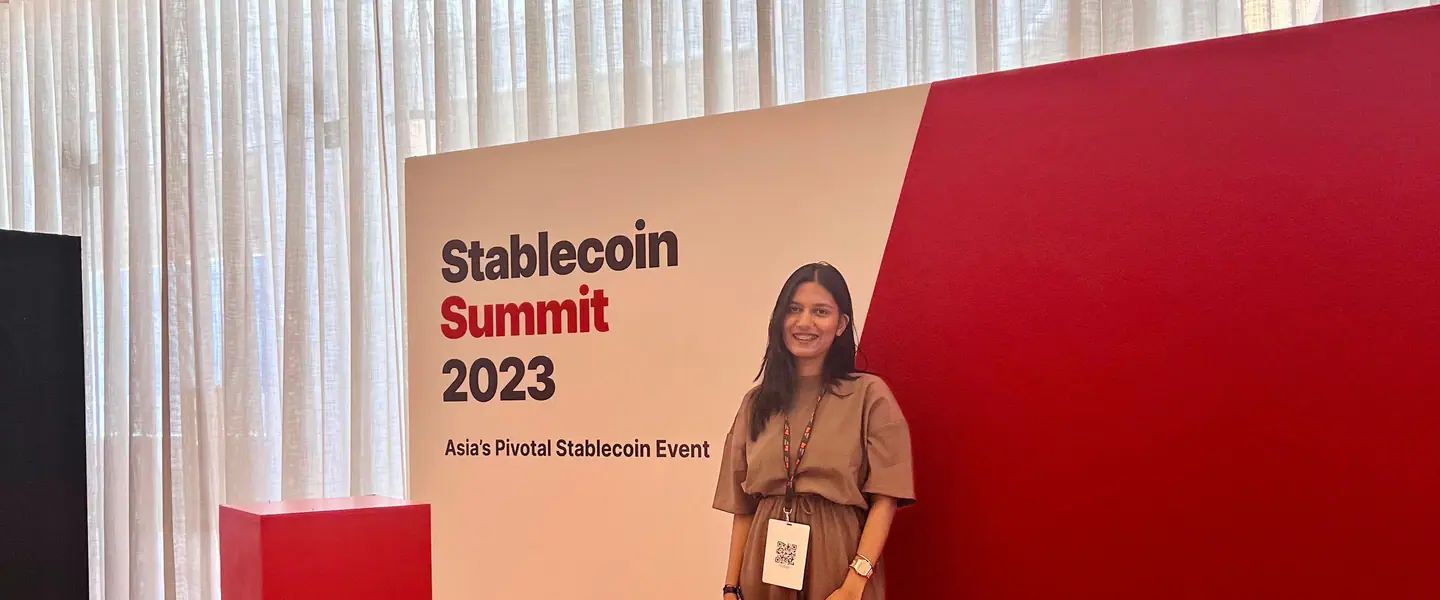
- WebX 2026 and Japan Blockchain Week (Tokyo, July 1 to 14, 2026). The biggest single Japanese crypto-press cycle of the year. WebX 2026 runs July 13 to 14 at The Prince Park Tower Tokyo, organized by CoinPost, with roughly 13,160 attendees from 88 countries and 296 speakers. The two-day program covers AI, tokenization, DeFi, regulation and institutional adoption. Pre-event embargoed CoinPost, CoinDesk Japan or Cointelegraph Japan exclusive, founder on-stage moment, side-event press wave, post-event tier-1 international re-report on the Friday.
- IVS Crypto and IVS Launchpad (Kyoto, summer 2026). The Japanese institutional-VC and founder-circuit moment that doubles as a Japanese press inflection point for raise announcements. The right cycle for Series A and B Japanese founders and for global Web3 startups closing a Japanese lead investor.
- Japan Fintech Week (FSA-aligned, late summer to early autumn 2026). The most-watched FSA calendar moment of the year. The right cycle for JPY-stablecoin, trust-bank intermediary, payments and tokenisation announcements. Nikkei and Iolite exclusive lead, CoinPost and CoinDesk Japan re-reports for the crypto-native depth.
- bitFlyer, Coincheck and Bitbank ecosystem events. The single-exchange community moments that double as listing-pipeline signaling. The right cycle for token issuers in the listing-pipeline window.
- NFT Tokyo, BUIDL Asia Tokyo side-tracks, AI Expo Tokyo. The community, builder and AI-enterprise side-event circuit. The right cycle for retail-investor, developer-audience and enterprise-AI announcements that need a Japanese engineering or enterprise-customer headline rather than a regulator-and-exchange headline.
FSA, FIEA, the trust-type stablecoin route and the spot ETF channel
Every Japanese press announcement Shilika ships in 2026 carries an FSA-aware framing line. The relevant frames:
- The June 1 2026 Payment Services Act amendments for foreign trust-type stablecoins. The FSA amendments recognize foreign trust beneficiary-rights stablecoins as electronic payment instruments handled domestically by registered electronic payment service providers, not securities under the Financial Instruments and Exchange Act. Foreign issuers must operate under foreign laws equivalent to Japan's banking or payment regulations and remain supervised by authorities capable of cooperating with the FSA. Reserve assets may sit in demand deposits, government bonds and cancellable fixed-term deposits under defined conditions. Only licensed Japanese financial institutions, registered fund-transfer providers and trust companies can issue stablecoins domestically.
- The April 10 2026 Cabinet-approved FIEA reclassification. Cabinet approval to reclassify 105 crypto assets including BTC and ETH as financial instruments, with full market conduct rules, disclosure obligations, insider-trading bans, mandatory annual disclosures by issuers and unlicensed-operation penalties of up to ten years in prison and 10 million yen fines. Press copy in 2026 has to confirm position vis-a-vis the reclassification, even though enactment is expected as early as 2027.
- The 20 percent flat capital-gains tax reform. The flat 20 percent tax rate replacing the progressive rate of up to 55 percent and the three-year loss-carryforward. The single biggest change to Japanese retail crypto behavior in a decade.
- The spot Bitcoin and Ethereum ETF approval pipeline. SBI and Nomura leading the first spot Bitcoin ETF pipeline, NISA Growth-tier eligibility unlocking 12.5 million retail accounts and roughly 5 trillion US dollars in household savings. Any custody, market-maker, ETF-adjacent or tokenisation announcement reads against this precedent.
- The Tokyo Stock Exchange listing track. The FSA reportedly aims to enable crypto ETF trading on the Tokyo Stock Exchange by 2028. Press copy on a listing or partnership with Tokyo-Stock-Exchange-adjacent institutions reads inside this timeline.
- JPCERT/CC, METI and the cyber beat. Cybersecurity press copy has to name the METI guidance and any JPCERT/CC advisory the announcement intersects with. Security NEXT, Nikkei Cross Tech and Impress Watch are reading both beats weekly.
The Japanese KOL layer that actually moves Japanese retail
Japanese crypto KOLs operate on four primary platforms in 2026, and the platform mix decides cost-effectiveness:
- Japanese X (Twitter). The dominant Japanese crypto-community surface with the deepest founder and retail attention. Japanese-language threads from named anonymous and named-real-identity KOLs drive Tokyo retail allocation and exchange-listing reaction. The right deliverable for an embargo-lift wave timed to the Japanese trade exclusive.
- LINE Open Chat. The primary closed-community Japanese crypto discussion surface, outpacing Telegram and Discord in local engagement. Channel-manager deliverables are time-sensitive and ideal for AMA announcements, exchange listings, airdrop campaigns and Japanese retail-investor education sessions.
- note.com. The dominant Japanese long-form thought-leadership platform. Japanese long-form note.com pieces compound in Japanese-language AI search citations (LINE AI, Google AI Mode in Japanese, ChatGPT Japanese, Perplexity Japanese) and are the highest-leverage AI-search citation unlock per dollar in Japan.
- YouTube. The most visible Japanese crypto and AI KOL surface for technical reviews, market commentary and FSA-policy explainers. Highest-priced layer. The right deliverable for a flagship long-form launch.
The AI search layer for Japanese audiences
Japanese audiences searching in Japanese and English see a mix of LINE AI, SoftBank-aligned generative answer surfaces, Google AI Mode, ChatGPT, Perplexity, Claude and Microsoft Copilot responses on Web3, AI and fintech queries. Per Google's AI optimization guide, non-commodity content with named-expert bylines and strong E-E-A-T signals wins citations on these surfaces, and Japanese press placements in CoinPost, CoinDesk Japan, Cointelegraph Japan, CryptoTimes JP, Iolite, Nikkei and Nikkei Cross Tech carry exactly that signal. Per Google's gen-AI content guidance, originality, named expertise and substantive review are the bar regardless of language.
The Princeton GEO study (Aggarwal et al., arXiv:2311.09735) found pages combining citations, statistics and named quotations get cited 30 to 40 percent more by generative engines, and the dynamic holds for Japanese-language AI search too. A campaign that earns a named-byline placement in CoinPost, CoinDesk Japan or Cointelegraph Japan and a note.com companion piece, then re-reports across CryptoTimes JP, Iolite and Nikkei, builds the citation graph that ChatGPT, Perplexity and LINE AI rank against on "best Web3 PR agency Japan", "JPY stablecoin licence", "bitFlyer listing", "WebX 2026 announcement" and "FIEA reclassification compliance" queries.
How to start
Book a 30-minute teardown. We look at whether Japan is the right first push for the next 90 days based on your actual fact set, which Japanese outlets map to your audience, the FSA framing your press copy will need under the June 1 2026 Payment Services Act amendments and the FIEA reclassification track, the WebX 2026 or Japan Fintech Week cycle that should anchor the launch, the named Japanese KOL voices that fit the brief, and which engagement shape (Quarterly Retainer, Single-Market Sprint or Always-On Coordinator) is the right one for your cycle. By the end of the call you will know whether the budget belongs in a Japan push this quarter or somewhere else entirely.