Who this is for
Founders who already know APAC is half the user growth conversation in Web3 and AI in 2026, and are tired of watching a global press release fall flat in Seoul, Tokyo, Mumbai and Dubai. Specifically:
- Web3 founders launching in APAC at mainnet, listing or token-launch moments where Korean, Japanese and Indian press is the difference between a regional unlock and a press blip.
- Recently funded Web3 and AI startups who closed a round but have no Asian or MENA press presence yet. The ICP this practice exists for, named explicitly in the brief.
- L1 and L2 protocol growth leads mapping a Korea, Japan or India go-to-market under the 2026 regulatory overhaul.
- RWA, DePIN, intents and restaking teams entering the MENA regulatory perimeter where Dubai and Abu Dhabi are setting the tokenisation tone.
- India-based founders who need a home-market exclusive plus international tier-1 cover.
- AI startup CMOs with APAC expansion plans. Agent infra, eval, dev tooling and AI safety stories that need a credible Korean and Japanese press footprint before a regional sales hire is justified.
- Cybersecurity vendors building APAC analyst credibility through native-language placements and on-ground event leverage at regional security summits.
Why APAC matters in 2026
Three reasons the regional surface is the highest-leverage move for a 2026 Web3 or AI founder:
- Audience weight. South Korea alone generates roughly half of all tracked crypto-native media traffic across Asia per the Outset PR Asia traffic report. India retained its position as the world's leading blockchain adoption market on Chainalysis' 2024 Global Crypto Adoption Index and grew its share of global Web3 developers to 15.2 percent, the fastest-growing developer ecosystem globally. Dubai and Abu Dhabi anchor the MENA regulatory perimeter that is setting the global tokenisation tone.
- Regulatory clarity. 2026 is the most overlapping regulatory year APAC crypto has seen. Korea's Financial Services Commission rolled five-minute exchange balance reconciliation and a zero-threshold Travel Rule live by end May. Japan enacted amendments in July 2026 that move crypto oversight from the Payment Services Act to the Financial Instruments and Exchange Act. Hong Kong's SFC is tightening VASP licensing. India is examining a coordinated legal framework while Budget 2025 introduced transaction-level reporting obligations from April 2026.
- AI search surfaces in local language. Naver and Kakao in Korea, LINE in Japan, Baidu's Ernie in mainland China, and the bilingual surfaces of ChatGPT, Perplexity, Claude and Google AI Mode all cite native-language sources when the query is asked in the local language. Most Western PR programs never produce native-language editorial, which means the supply of citation-grade APAC content is structurally thin.
The six-market weight in 2026
| Market | What it weighs | Top outlets | What journalists ask first |
|---|---|---|---|
| South Korea | ~50% APAC crypto-native traffic | BloomingBit, TokenPost, BlockMedia, Coinness, CoinReaders | Korean exchange listing status, FSC regulatory note, Korean-press headshot |
| Japan | ~10%, rising regulatory weight | CryptoTimes JP, Coinpost, Iolite | Partner-name credibility anchor, clean data, FIEA-aware framing |
| Greater China | Bilingual diaspora reach via Hong Kong-routed outlets | ChainCatcher, Jinse, PANews, Foresight News | Mandarin-original copy, HK or Singapore licensing footnote, no mainland-promotion language |
| India | Home market, category-builder for AI | Inc42, YourStory, Economic Times, Business Today, Forbes India, Mint | Founder country of origin, lead-investor name, SEBI-adjacent framing, engineer-audience hook for AI |
| Vietnam | Highest-growth retail Web3 market in SEA | Coin68, Tinhte, regional Telegram-led press | Telegram-readable framing, native creator partnership, no securities language |
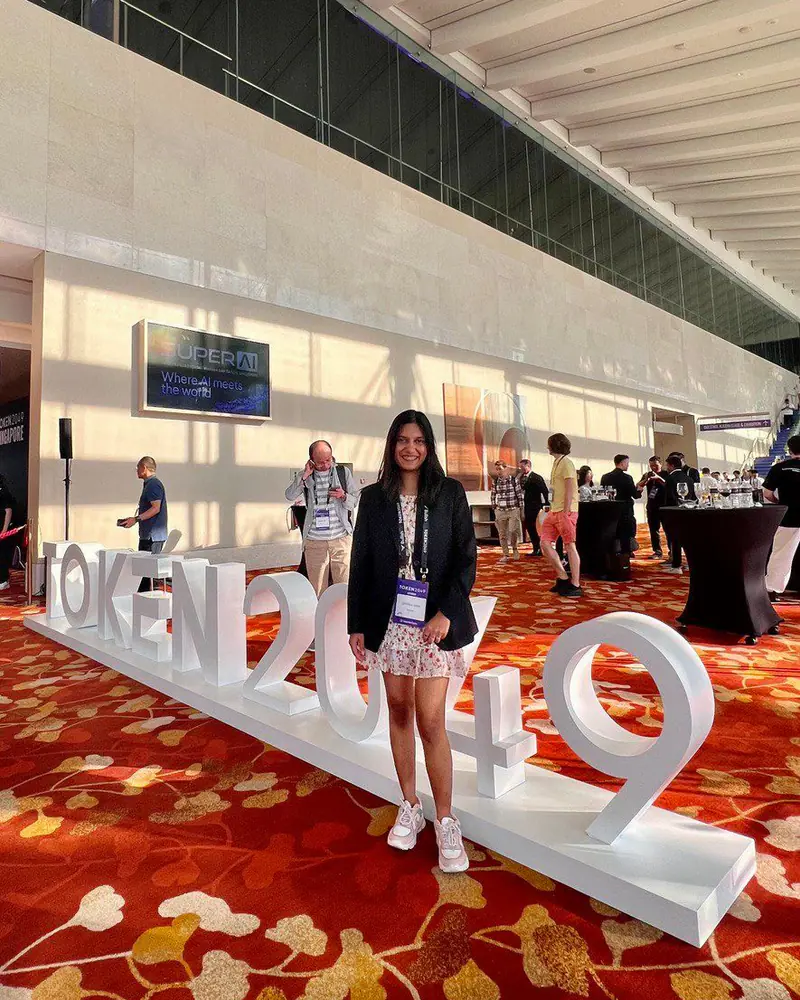
| Singapore | Regional event hub, MAS credibility anchor | e27, Tech in Asia, DealStreetAsia, Token2049 newsroom | MAS-licensing status, regional headquarters claim, event-tied exclusive |
| MENA (UAE) | Fastest-moving Web3 regulatory perimeter | Arabian Business, Gulf News, Cointelegraph Arabic, The National | UAE or Saudi regulatory tie-in, named local partner, Token2049 Dubai stage moment |
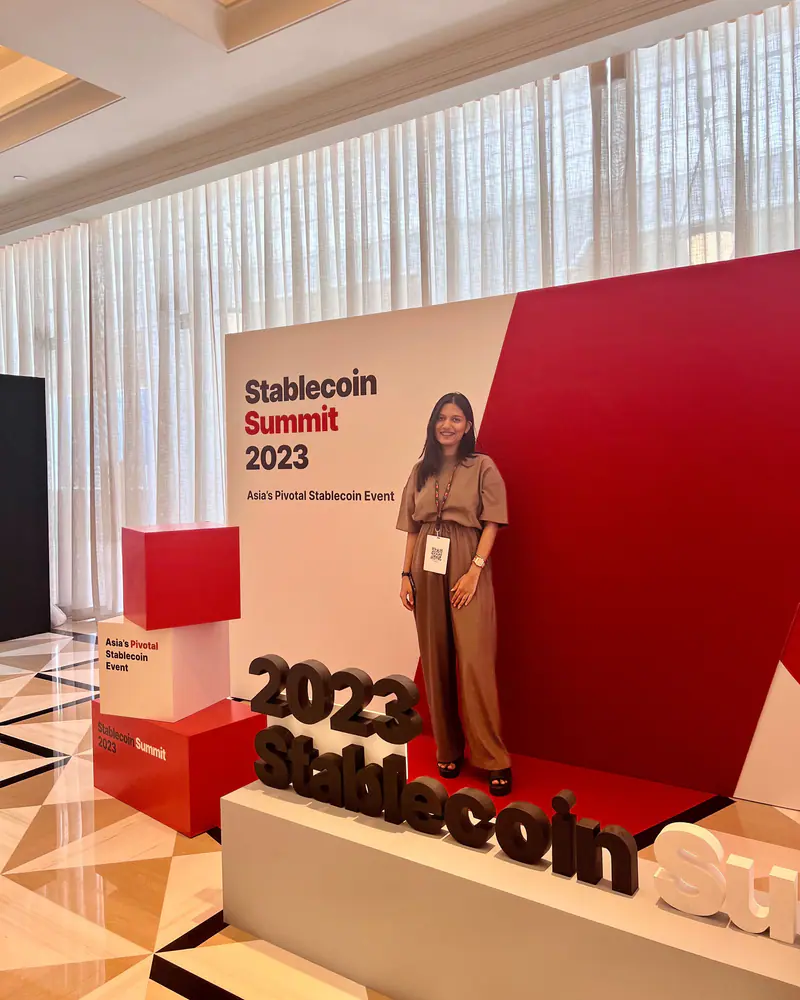
The regional event circuit Shilika maps to, Q4 2026 to Q2 2027
Updated after the autumn cycle. Korea Blockchain Week and Token2049 Singapore have run, so the next anchors sit in Mumbai, Singapore and Hong Kong.
Next on the calendar
- India Blockchain Week and Devcon 8 (Mumbai, 1 to 6 November 2026). India Blockchain Week moves to Mumbai on 1 to 2 November, held ahead of Devcon 8 at the Jio World Centre on 3 to 6 November, the first Devcon in India. Global Ethereum press will be in one Indian city for a week. Brief the Inc42 or Economic Times exclusive by late October, then use the week for in-person briefings with international trade press. See the India desk.
- Singapore FinTech Festival (18 to 20 November 2026). The MAS calendar moment for tokenisation, stablecoin and payments news. Business Times or DealStreetAsia exclusive, briefed by early November. See the Singapore desk.
- Consensus Hong Kong (1 to 3 February 2027). Hong Kong Convention and Exhibition Centre. Greater-China diaspora plus regional partnership announcements. ChainCatcher and Jinse plus a tier-1 Western re-report. Brief in early January.
- Token2049 Dubai (moved to 21 to 22 April 2027). Organisers postponed the 2026 edition by a year in March 2026, citing regional uncertainty. Until April 2027, MENA announcements anchor to the replacement windows mapped on the Dubai and MENA desk. Arabian Business, Gulf News and Cointelegraph Arabic placements still pair best with a UAE or Saudi local-partner announcement.
- ETHIndia (Bengaluru). The right cycle for Indian developer-audience announcements. Organisers have not published 2026 or 2027 dates yet, so confirm before anchoring a launch to it.
Already run in 2026
- Korea Blockchain Week (Seoul, 29 September to 1 October 2026). The biggest single APAC press cycle of the year. 2027 dates are not published yet. Until then, Korea news runs on your own listing or mainnet milestone.
- Token2049 Singapore (7 to 8 October 2026). Regional VC and ecosystem audience. 2027 dates are not published yet.
- Japan Blockchain Week and WebX (Tokyo, July 2026). Japan Blockchain Week ran 1 to 15 July, with WebX on 13 to 14 July. Coinpost and CryptoTimes JP exclusives pair best with a Japanese-partner credibility anchor. See the Japan desk.
- Consensus Hong Kong (10 to 12 February 2026). The 2027 edition is listed above.
Expanding into APAC in Q4 2026 or Q1 2027: where to start
For Web3 and AI companies that are growing fast and want a second region live inside the next two quarters, the two biggest autumn anchors (Korea Blockchain Week and Token2049 Singapore) have already run, and Token2049 Dubai is now an April 2027 event. That changes the first move:
- Listing or mainnet in the pipeline. Korea first, run as a Single-Market Launch Sprint timed to your own milestone rather than an event. See the Korea desk.
- RWA, stablecoin or tokenisation story. MENA first, anchored to the regional windows on the Dubai and MENA desk, not to Token2049 Dubai.
- AI startup hiring engineers or selling to developers. India first, as a home-market exclusive that anchors international re-reports. Devcon 8 in Mumbai (3 to 6 November 2026) is the nearest event hook for Ethereum-ecosystem and developer-tool news. See the India desk.
- Regional fundraise or partnership news. Singapore first, with a DealStreetAsia or e27 exclusive, ideally timed to Singapore FinTech Festival (18 to 20 November 2026). See the Singapore desk.
For the timing of the announcement itself, the APAC press windows guide covers the regional news windows and the translation lag. If you only have budget for one market this quarter, pick the one where your next real milestone lands, then add the second market on the following milestone.
Proof: three campaigns, three regional playbooks
RARI Chain mainnet - 11 tier-1 placements paired with coordinated APAC translations
The January 2024 RARI Chain mainnet launch ran a 9-day CoinDesk embargo on the NFT royalty-enforcement angle, then 11 simultaneous tier-1 placements at 9 AM ET launch, including coordinated APAC translations into Korean (BloomingBit, TokenPost), Japanese (CryptoTimes JP, Coinpost) and Chinese (ChainCatcher, Jinse) within the first 24 hours. The operational lesson: APAC translations cannot be an afterthought picked up two days after the Western news cycle has closed.
MANTRA Chain $11M raise - winning a Middle East RWA story out of an Abu Dhabi lead investor
The MANTRA $11M raise in March 2024 was reframed as a Middle East RWA story anchored on Abu Dhabi-based lead investor Shorooq Partners and a live MENA regulatory beat, won as a CoinDesk exclusive ("MANTRA Chain Raises $11M for RWA Tokenization With Middle East Tint", March 19 2024) and re-reported across Decrypt, CryptoPotato, CryptoDaily and Milk Road. The MENA framing did not just win the news hit. It set up a durable category position that paid out again at the Cointelegraph "Everything Tokenized" CEO profile of John Mullin from the same raise.
Bullieverse $4M seed - dual-track Indian home-market exclusive plus crypto-native tracks
The Bullieverse $4M seed (February 2022) was launched as an Economic Times exclusive, then run on two parallel press tracks. Mainstream Indian business and startup media (Inc42, YourStory, Business Today) and crypto-native outlets (NewsBTC, HackerNoon founder interview) each carried their own framing of the same fact set. The operational lesson: in regional markets the home-market exclusive is the wave.
The AI-search layer for APAC PR in 2026
Per Google's AI optimization guide, the things that move the needle for AI features are non-commodity content with a unique point of view, crawlable indexable pages, multimodal assets, and strong E-E-A-T signals. Per Google's gen-AI content guidance, AI-assisted writing is judged on originality, named expertise, experience and substantive review. Both standards travel across language.
The Princeton GEO study (Aggarwal et al., arXiv:2311.09735) found pages combining citations, statistics and named quotations get cited 30 to 40 percent more by generative engines, and the dynamic holds for region-native AI engines too. A campaign that produces named-byline placements in BloomingBit, TokenPost, CryptoTimes JP, Coinpost, ChainCatcher, Jinse, Inc42 and Cointelegraph Arabic seeds those answer engines with the citations they rank against, in the language the query was asked in.
How a regional cycle actually unfolds
A typical Single-Market Launch Sprint over 14 to 21 days, here a Korea push timed to a mainnet:
- Days 1 to 4. Pull the Korean exchange listing landscape; identify the Korean lead-investor or partner credibility anchor; choose 6 to 9 outlets to target (a tier-1 trade lead like BloomingBit or TokenPost, two re-report destinations, two newsletter stops, two regional KOL voices); draft the Korean press kit with FSC five-minute-reconciliation framing.
- Days 5 to 10. Brief the tier-1 trade lead under a 5-day embargo; brief re-report destinations 48 hours behind; brief named Korean KOL voices for a Korean Telegram and Naver activation timed to embargo lift; line up a Korean-press founder headshot and a Korean-language quote.
- Days 11 to 16. Embargo lifts at 10 AM KST. Tier-1 leads, re-reports, KOL wave and the founder's Korean LinkedIn or X-Korea post all hit inside a four-hour window. Always-on monitoring for sentiment and any regulatory follow-up.
- Days 17 to 21. Named placements landed, audience overlap, sentiment delta vs the pre-launch baseline, Korean-search-impressions delta, and a renew-or-kill call per KOL on the wave.
How to start
Book a 30-minute teardown. We look at which APAC markets actually map to your buyer set, the event timing that should anchor the next 90 days, the per-market compliance constraints under the 2026 overhaul, the realistic translation and regional KOL budget you should be planning around, and which of the three engagement shapes is the right one for the next cycle. By the end of the call you will know whether the budget belongs in an APAC push this quarter or in product, trade-press, founder profiling or domestic paid acquisition instead.