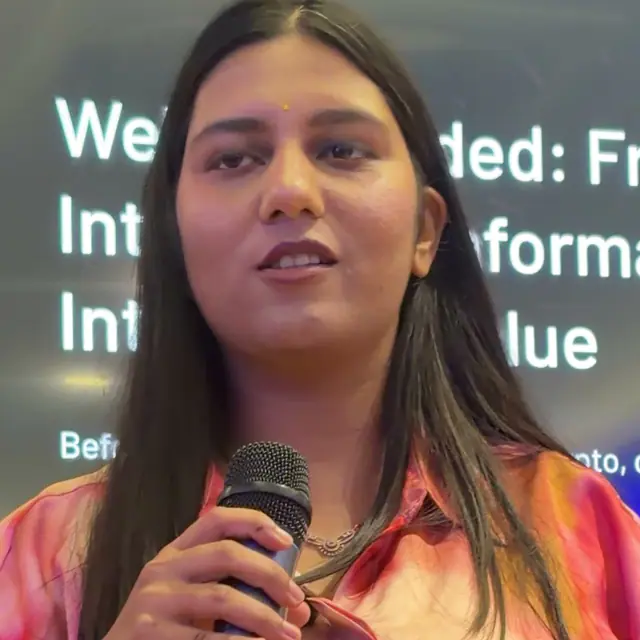
In short
The founder PR course teaches founders and early operators to run their own press: how to position the founder as a voice, find and pitch the right journalists, write a press release reporters will read, and tell the company story in a way that survives an interview. It runs as a one-hour masterclass, a three-day workshop or a six-module course with activities and quizzes.
Which format fits: masterclass, workshop or course?
| Format | Length | Best for | Participants leave with |
|---|---|---|---|
| One-hour masterclass | 60 minutes | Guest lectures, conference sessions, team lunch-and-learns, accelerator demo weeks. | A 13-slide framework and a one-page plan. |
| Three-day workshop | 3 days, about 6 hours a day | Accelerator cohorts, leadership offsites, university immersion weeks, in-house comms teams. | A press release draft, a rehearsed two-minute founder story and a 90-day PR plan. |
| Multi-module course | 6 modules, usually one a week | Semester electives, cohort programs, founders who want to run their own PR after the course. | A launch pack for one real story: positioning doc, 30-name tiered list, three sent pitches with results, a press release, and a recorded two-minute founder story. Shilika reviews each pack line by line. |
What will participants be able to do?
- Write a three-sentence founder thesis that a journalist can quote.
- Build a 30-name media list from bylines, not from a database export.
- Write a pitch under 150 words with the news in the first line.
- Draft a press release with a real headline, a dateline and a quote that says something.
- Turn a product update into a story with a reason to run this week.
- Measure coverage by what it moved, not by how many links it produced.
Why learn this from Shilika Jain?
- Ran founder-led visibility for GAIA from Dec 2024 to Apr 2025, from podcasts to Forbes and Decrypt.
- Placed Fluence co-founder Tom Trowbridge as a DePIN voice, including a CoinDesk op-ed in April 2025.
- Framed MANTRA Chain's $11M raise around RWA and a Middle East angle for CoinDesk in March 2024.
- Taught PR to accelerator founders at the XRPL Labs Accelerator with Tenity and in the Myosin Learns series.
Most projects think PR means asking a publication to write about them. It is the storyline, the messaging, targeted pitches, and the follow-up.
Format 1 · 60 minutes
One-hour masterclass: the slide-by-slide outline
One deck that takes a founder from "we need press" to a one-page PR plan. Built for accelerator sessions and founder dinners where the room has an hour and wants something to use on Monday.
Format 2 · 3 days
Three-day workshop: the day-by-day agenda
Three days that end with a founder holding a finished positioning doc, a media list, pitches ready to send and a press release draft. Built for accelerator cohorts and founding teams who want to leave with work done, not notes.
Day 1: Founder positioning and narrative
| Time | Session |
|---|---|
| 09:30 to 11:00 | How newsrooms decide. What an editor filters for in the first 15 seconds, the difference between earned, sponsored and paid placements, and why most founder pitches never get opened. |
| 11:15 to 12:45 | The founder thesis. Each founder writes a three-sentence thesis, then the room tears it apart. Rewrites until a stranger can repeat it back. |
| 13:45 to 15:15 | Category word and message house. Pick the one word you want attached to your name, then build three supporting messages with a proof point under each. |
| 15:30 to 17:00 | Story mining. Go through the next six months of roadmap, hires and data and pull out every possible news hook. Rank them by what a reporter would care about. |
End of day 1: A one-page positioning doc: thesis, category word, message house and a ranked list of six story hooks.
Day 2: Media outreach
| Time | Session |
|---|---|
| 09:30 to 11:00 | Byline research. Use site search on CoinDesk, Decrypt, TechCrunch or your sector's trade press to find the reporters who covered your category in the last 90 days. |
| 11:15 to 12:45 | Build the 30-name list. Tier the list by fit, not by logo. Note each reporter's last relevant story and the angle they keep returning to. |
| 13:45 to 15:15 | Pitch writing lab. Write three pitches under 150 words for three different reporters. Swap with a partner, cut every sentence that does not earn its place. |
| 15:30 to 17:00 | Exclusives, embargoes and follow-up. When to offer an exclusive, how an embargo works across time zones, and the one follow-up that is polite rather than pushy. |
End of day 2: A tiered 30-name media list and three pitches ready to send.
Day 3: Press releases and storytelling
| Time | Session |
|---|---|
| 09:30 to 11:00 | Press release clinic. Write a release for your strongest hook: headline, dateline, standalone first paragraph, a quote with a view, and a short boilerplate. |
| 11:15 to 12:45 | Storytelling for interviews. Turn the thesis into a two-minute story with a moment, a tension and a turn. Practise it until it sounds like talking, not reading. |
| 13:45 to 15:15 | Mock interview. Each founder takes a ten-minute mock interview with tough follow-ups, then reviews the recording against the message house. |
| 15:30 to 17:00 | 90-day PR plan and measurement. Map three stories onto the next quarter, set who approves quotes, and agree on the three numbers that show PR is working. |
End of day 3: A press release draft, a rehearsed two-minute founder story and a 90-day PR plan.
Format 3 · 6 modules
Six-module course: decks, activities and quizzes
Six modules, each with its own slide deck, a hands-on activity and a short quiz. Founders finish with a capstone: a full launch pack reviewed line by line.
Cadence: 6 weekly modules. 90 minutes live, plus about 2 hours of activity work per week.
Module 1: How PR works in 2026
Deck 1: Earned, owned, paid and AI search
What a newsroom wants, why press releases alone rarely earn coverage, and how AI assistants now pick up and repeat what tier-1 and trade outlets publish.
Activity: Audit the last ten stories in your category. For each, note the outlet, the reporter, the hook and whether it was earned or sponsored.
Quiz
1. Who does a journalist work for?
Show answer
A. Their publication and its readers Reporters are paid by their publication to serve its readers. A pitch that does not serve those readers gets ignored.
2. Which is earned media?
Show answer
C. A reporter quoting your founder in a story they chose to write Earned media is coverage an editor chose to run. You cannot buy it, which is why readers and AI engines trust it more.
3. What usually happens to a wire release with no story behind it?
Show answer
D. It lands on syndication sites that few people read Distribution without a story produces links on low-traffic syndication pages, not editorial coverage.
Module 2: Founder positioning
Deck 2: The thesis, the category word and the message house
How to position a founder as a voice in a category: one belief worth arguing, one category word reporters already cover, and three messages with proof.
Activity: Write your three-sentence thesis and a message house. Test the thesis on three people outside your industry and rewrite it after each one.
Quiz
1. What are the three parts of a founder thesis?
Show answer
B. What is broken, what you believe others do not, your proof A thesis names a problem, takes a position and backs it with evidence. That is what makes it quotable.
2. Why did RARI Chain lead with "royalties" rather than "new L2"?
Show answer
C. Reporters already covered creator royalties as a beat A word editors already cover gives a launch a slot to fit into. "Another L2" competes with dozens of launches that week.
3. A message house should have how many supporting messages under the main one?
Show answer
A. Three Three messages are easy to remember under pressure and each can carry its own proof point.
Module 3: Finding stories
Deck 3: News hooks, newsjacking and data stories
The six types of news a reporter will run, how to react to someone else's news with a useful view, and how to turn your own data into a headline.
Activity: List every possible hook in your next six months. Pick one live news event this week and write a 100-word expert comment you could send a reporter today.
Quiz
1. Fluence ran in e27 by tying its story to what?
Show answer
D. A global Microsoft outage Newsjacking a mainstream outage gave an infrastructure company a reason to be quoted outside crypto media.
2. Why did Tangem's self-custody survey travel across markets?
Show answer
B. It gave reporters one clear stat to lead with A single strong number (two thirds of users back self-custody) is easy to headline in any language.
3. Which of these is weakest as a news hook?
Show answer
A. A minor UI update A small product tweak matters to users, not to readers of a news outlet. Put it on your blog.
Module 4: Media outreach
Deck 4: Lists, pitches, exclusives and follow-up
Building a media list from bylines, writing a pitch under 150 words, when to offer an exclusive, how embargoes work and how to follow up once.
Activity: Build a 30-name list with each reporter's last relevant story. Write and send three pitches, then log replies, opens and what you would change.
Quiz
1. Where should the news go in a pitch?
Show answer
C. In the first line Reporters decide in seconds. If line one does not hold the news, the rest is rarely read.
2. What is the best source for a media list?
Show answer
D. Reporters who recently wrote about your category A reporter who covered your category last month already has a reason to care. Generic lists produce generic silence.
3. How many follow-ups is reasonable for an unanswered pitch?
Show answer
B. One, with something new One follow-up that adds a fact or a new angle is helpful. Repeated chasing burns the relationship.
Module 5: Press release development
Deck 5: Writing a release reporters can use
Release structure from headline to boilerplate, how to write a quote that says something, and when a release helps versus when a pitch alone is better.
Activity: Write a press release for your strongest hook. Cut the first draft by a third, then rewrite the quote until it holds an opinion.
Quiz
1. What should the first paragraph of a release do?
Show answer
C. State the news so it stands alone Many readers and AI engines only take the first paragraph. It must carry who, what, when and why it matters.
2. Which quote is stronger?
Show answer
A. "Creators lose royalties on most marketplaces today. We built a chain where that cannot happen." A good quote names a problem and takes a position. Excitement is not information.
3. When is a pitch alone often better than a release?
Show answer
D. When you want an exclusive with one reporter An exclusive is a private offer to one reporter. A public release removes what made it exclusive.
Module 6: Storytelling, interviews and measurement
Deck 6: The two-minute story, the interview and the scorecard
Turning the thesis into a story with a moment and a turn, handling interviews and podcasts, and measuring PR by inbound, investor interest and AI citations.
Activity: Record a two-minute founder story and a ten-minute mock interview. Score the recording against your message house and set three PR metrics for the quarter.
Quiz
1. What made GAIA's founder visibility compound into Forbes coverage?
Show answer
B. A steady run of interviews around one narrative Repeated founder interviews on decentralized AI agents built a body of work that tier-1 reporters could find and cite.
2. Which metric says the most about PR working?
Show answer
A. Inbound from the right buyers or investors after a placement Coverage matters when it changes who contacts you. Link counts and inflated impressions do not.
3. In an interview, what do you do with a question you should not answer?
Show answer
C. Acknowledge it and bridge to a message you can stand behind Bridging respects the question and moves to ground you can speak to honestly.
Capstone: A launch pack for one real story: positioning doc, 30-name tiered list, three sent pitches with results, a press release, and a recorded two-minute founder story. Shilika reviews each pack line by line.
How does it change for students, C-suite and operators?
For students
For business, journalism and mass communication students the course uses public case studies (RARI, MANTRA, Fluence) instead of their own company, and the capstone is a launch pack for a real startup they pick.
For c-suite
For executives the outreach modules shrink and the thesis, message house and interview modules grow. The capstone becomes a recorded interview and a 90-day visibility plan for the leadership team.
For founders & operators
For founders and first marketing hires every exercise uses their own company, roadmap and target outlets. They leave with pitches sent and a release ready for their next announcement.
Frequently asked questions
Who is the founder PR course for?
Seed to Series A founders, the first marketing or comms hire, and accelerator cohorts. It also runs for students and executive teams with the changes described in the audience section.
Do founders need PR experience before the course?
No. Module 1 starts with how newsrooms work. Founders who have pitched before skip ahead faster in the outreach and release modules.
Will the course get my company press coverage?
The course teaches you to earn coverage yourself and ends with pitches sent. Placement depends on your news and your timing, so no course can promise it honestly.
Is it online or in person?
Both. The one-hour masterclass and the six-module course work well online. The three-day workshop works best in person, for example inside an accelerator or offsite.
How is the founder PR course priced?
Pricing is quoted per cohort, based on format, group size and location. Student and non-profit sessions are often considered pro bono. Book a call to scope it.
Where has Shilika taught and spoken?
- Aug 2026: Spoke to students at SJCC, Bengaluru, on Web3 and blockchain.
- May 2026: Judged a Stellar founder cohort run by Myosin and advised founders on PR strategy.
- Jul 2025: Ran a PR workshop for the XRPL Labs Accelerator with Tenity, for PayFi and tokenisation founders.
- Jan 2025: Invited to speak at an IIT event.
- Dec 2024: Moderated the PR panel at India Blockchain Week.
- Dec 2024: Spoke on "Mastering the ABCs of Web3 PR" at India Blockchain Week 2024.
Related reading and other programs
Book this program
Run it for your cohort, class or team.
Pick a format, share the group size and dates, and Shilika will tailor the decks, exercises and quizzes. Pricing is quoted per cohort. Student and non-profit sessions are often considered pro bono.
Book a 30-min scoping call