In short
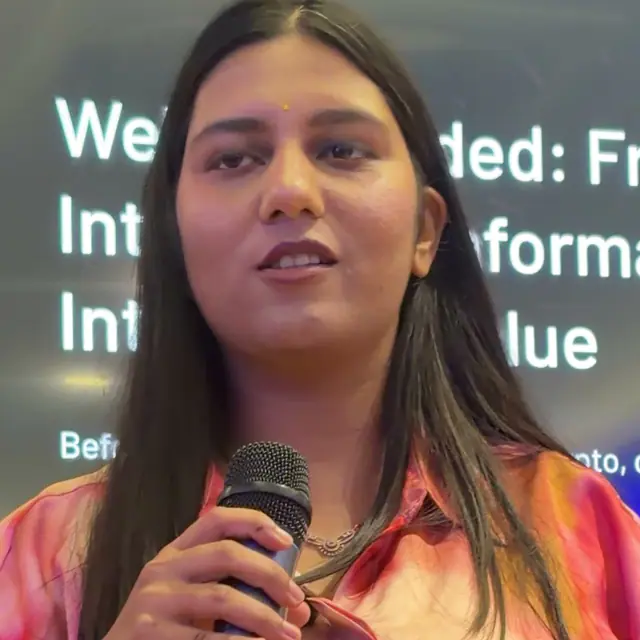
Media training for executives prepares CEOs, CXOs and named company spokespeople to speak for the institution in print, broadcast, podcast and panel interviews, under hostile or investigative questioning, and on crisis and announcement days. Shilika Jain teaches it as a one-hour masterclass, a three-day workshop or a six-module course with activities and quizzes.
Which format fits: masterclass, workshop or course?
| Format | Length | Best for | Participants leave with |
|---|---|---|---|
| One-hour masterclass | 60 minutes | Guest lectures, conference sessions, team lunch-and-learns, accelerator demo weeks. | A 14-slide framework and a one-page plan. |
| Three-day workshop | 3 days, about 6 hours a day | Accelerator cohorts, leadership offsites, university immersion weeks, in-house comms teams. | A crisis holding statement template, a drafted investigative response and a one-page spokesperson card for every executive. |
| Multi-module course | 6 modules, usually one a week | Semester electives, cohort programs, founders who want to run their own PR after the course. | A pressure test for each executive: a 15-minute recorded mock interview with hostile and investigative questions, a written response to an investigative inquiry, a crisis holding statement and a one-page spokesperson card. Shilika reviews the recording and the documents line by line. |
What will participants be able to do?
- Say the company's roof line in 15 seconds and back it with three pillars and proof.
- Answer a hard question in one honest sentence, then bridge to a message you can stand behind.
- Change answer length and delivery for print, live broadcast, podcast and panel formats.
- Stay level through a hostile interview and answer investigative questions early and accurately.
- Draft a crisis holding statement inside an hour and take press questions on it.
- Post on LinkedIn and X in your own voice without creating a second, unapproved company message.
Why learn this from Shilika Jain?
- Interviewed founders for CryptoDaily UK at TOKEN2049 and Solana Breakpoint in 2024, so the training starts from what the reporter's side of the table listens for.
- Ran GAIA's founder interview run from Dec 2024 to Apr 2025: podcasts first, then Forbes, Decrypt and Benzinga around one narrative.
- Positioned Fluence co-founder Tom Trowbridge as a DePIN voice through interviews and op-eds, including a CoinDesk op-ed in April 2025.
- Handled MANTRA Chain's $11M raise for CoinDesk in March 2024 and a Cointelegraph interview with its CEO.
- Trained as a public speaker through Toastmasters and moderated the PR panel at India Blockchain Week in Dec 2024.
If an investigative journalist keeps coming back with specific questions, answer sooner rather than later.
Format 1 · 60 minutes
One-hour masterclass: the slide-by-slide outline
One deck that turns a leadership team into spokespeople with a shared message house and a one-page card each. Built for leadership offsites, board weeks and the hour before a big announcement.
Format 2 · 3 days
Three-day workshop: the day-by-day agenda
Three days of drills, recordings and simulations for a leadership team. Executives leave with a shared message house, recorded interviews in three formats, a crisis holding statement and a spokesperson card each.
Day 1: Message discipline and the reporter's view
| Time | Session |
|---|---|
| 09:30 to 11:00 | How reporters choose who to quote. What an editor wants from an executive interview, how on record, on background and off record work, and what "no comment" sounds like to a reader. Taught from the interviewer's side of the call. |
| 11:15 to 12:45 | Building the message house. The team writes one roof line and three pillars, then finds a proof point a reporter could check under each. Anything that can't be proven comes out. |
| 13:45 to 15:15 | Bridging drills. Thirty rapid-fire questions per executive, from friendly to awkward. Each answer is scored on two things: did they answer first, and did they bridge to a pillar. |
| 15:30 to 17:00 | The spokesperson map. Decide who speaks on what: the CEO on strategy, the CFO on numbers, the CTO on product and security. Agree the topics nobody comments on and who approves quotes. |
End of day 1: A shared message house with proof points and a spokesperson map that names who speaks on which topics.
Day 2: Formats and on-camera presence
| Time | Session |
|---|---|
| 09:30 to 11:00 | Print and podcast interviews. Each executive sits a recorded 20-minute print-style interview, then a podcast segment. The group picks the quote a reporter would actually use and checks it against the house. |
| 11:15 to 12:45 | Broadcast and remote video. Twenty-second answers, eye line, posture, lighting and sound for remote calls. Every executive does three live-style takes and watches them back. |
| 13:45 to 15:15 | Panels and fireside chats. A mock panel with a moderator who interrupts and a co-panelist who disagrees. Each executive has to land one point in their first turn. |
| 15:30 to 17:00 | Executive voice on LinkedIn and X. Rewrite three recent posts in the executive's own voice using one pillar each. Set the rule for posting on breaking news and what waits for comms. |
End of day 2: Recorded mock interviews in print, broadcast and panel formats with a scored review, plus three rewritten LinkedIn or X posts.
Day 3: Pressure: hostile, investigative, crisis and announcements
| Time | Session |
|---|---|
| 09:30 to 11:00 | Hostile interview simulation. Loaded premises, false choices, interruptions and long silences, run until each executive can stay level and correct a premise without repeating it. |
| 11:15 to 12:45 | Investigative inquiry drill. The team receives written questions from a mock investigative reporter with a 24-hour deadline. They draft an accurate response with whoever would approve it in real life. |
| 13:45 to 15:15 | Crisis press statement. A security incident breaks mid-session. The team has 60 minutes to publish a holding statement, then the spokesperson takes a five-minute press call on it. |
| 15:30 to 17:00 | Announcement day rehearsal. A funding or results announcement with a list of cleared and off-limits figures. Reporters push for the numbers you can't share, and each executive finishes their spokesperson card. |
End of day 3: A crisis holding statement template, a drafted investigative response and a one-page spokesperson card for every executive.
Format 3 · 6 modules
Six-module course: decks, activities and quizzes
Six modules, each with its own slide deck, a recorded drill and a short quiz. The capstone is a pressure test: a recorded interview, a written investigative response and a crisis statement, reviewed line by line.
Cadence: 6 weekly modules. 90 minutes live, plus about 90 minutes of recorded practice per week.
Module 1: The executive as spokesperson
Deck 1: How reporters pick who to quote
What changes when a CEO or CXO speaks: every line becomes company policy. Covers on record, on background and off record, and how a reporter picks one quote from a 30-minute call, seen from the journalist's chair.
Activity: Pull three recent interviews with executives in your sector and mark the quote each reporter used. Write down what made it usable, then list every topic your company has no prepared public answer for.
Quiz
1. Halfway through a call, a reporter says "this part is just between us", but no ground rules were agreed. What is the safe assumption?
Show answer
C. It is on the record unless both sides agreed otherwise before you spoke Ground rules are agreed before the words are said, not after. Without that agreement, treat everything as quotable.
2. What usually decides which quote a print reporter uses from a 30-minute interview?
Show answer
D. A sentence that says something clear and stands alone Reporters pick short, complete sentences with a point of view. Long hedged answers get paraphrased or cut.
3. Who should answer a reporter's question about quarterly revenue?
Show answer
A. The CFO or the executive cleared for financial questions A spokesperson map assigns topics. Numbers go to the person accountable for them and cleared to discuss them.
Module 2: The message house and bridging
Deck 2: Roof line, pillars, proof and the bridge
Build a message house with one roof line, three pillars and proof under each, then learn to bridge: answer honestly in one sentence, then move to a pillar. The house is shared across the leadership team so the CEO and CTO never contradict each other in print.
Activity: Write the company's message house as a team. Then run 20 rapid-fire questions on each executive and score whether they answered first and bridged second.
Quiz
1. Asked about a competitor's lawsuit, which answer is the strongest bridge?
Show answer
B. "We're not party to that case, so I won't speculate. It does show how much buyers care about data handling, which is why we publish our audits." It answers honestly, sets a boundary and moves to a pillar with proof. A bridge that skips the answer reads as a dodge.
2. Why should a whole leadership team share one message house?
Show answer
C. So two executives quoted in the same week don't contradict each other Reporters compare quotes. One house lets each executive speak in their own words while landing the same three points.
3. What belongs under each pillar of a message house?
Show answer
D. A proof point a reporter can check Proof turns a message into a fact. A number, a named customer or a dated milestone gives the reporter something to print.
Module 3: Interview formats and on-camera presence
Deck 3: Print, broadcast, podcast and panel
Print rewards quotable sentences, broadcast rewards 20-second answers, podcasts reward stories that survive clipping, and panels reward one early point. Also covers on-camera basics: eye line, pace, posture and a remote setup that doesn't distract.
Activity: Record the same interview in three formats: a print phone call, 20-second broadcast answers and a podcast segment. Review each for filler words, answer length and whether the roof line came through.
Quiz
1. In a live broadcast interview, how long should a typical answer run?
Show answer
A. About 20 seconds, conclusion first Live segments give you two or three answers. Leading with the conclusion means the point survives even if the host cuts in.
2. On a remote video interview, where should you look while you speak?
Show answer
A. Into the camera lens Looking into the lens reads as eye contact to viewers. Looking at the face on screen reads as looking down.
3. Why treat a long, friendly podcast as fully on the record?
Show answer
B. Any 30-second clip can be cut and shared without the context around it Clips travel on X and LinkedIn by themselves. Every answer has to hold up if someone hears only that answer.
Module 4: Hostile and investigative questions
Deck 4: Staying level under pressure
Hostile questions test composure and investigative questions test facts. Covers loaded premises, false choices, interruptions and silence, plus how to handle a reporter who keeps returning with specific, documented questions: respond early, accurately and with legal review.
Activity: Sit a ten-minute hostile mock interview on camera. Then answer a set of written investigative questions against a 24-hour deadline, drafted with the people who would approve it in real life.
Quiz
1. A reporter asks, "Why did you mislead investors?" What should you do first?
Show answer
B. Reject the premise calmly without repeating the loaded word, then state the facts Repeating "mislead" hands the reporter a clip of you saying it. Correct the premise in your own words, then give the facts.
2. An investigative journalist has emailed three times with specific, documented questions. What is the best response?
Show answer
C. Answer sooner rather than later, accurately and with legal review Specific repeated questions mean the story is running anyway. An early, accurate answer is how your side gets into it.
3. You finish an answer and the reporter stays silent. What do you do?
Show answer
D. Stop and wait for the next question Silence is a technique for drawing out an unplanned line. A finished answer doesn't need a second half.
Module 5: Crisis statements and announcement days
Deck 5: Holding statements, funding and results
In a crisis the first statement goes out within hours: what happened, what you know, what you're doing and when you'll update. On funding, results and partnership days, executives need the cleared numbers, the off-limits numbers and the angle that makes the figure news.
Activity: Draft a holding statement for a security incident in 60 minutes, then take a five-minute press call on it. Next, rehearse a funding or results announcement against a list of approved and off-limits figures.
Quiz
1. What belongs in a first holding statement during a crisis?
Show answer
B. What happened, what you know, what you're doing and when you'll update A short holding statement fills the gap before speculation does. Promising a time for the next update buys time honestly.
2. Why did MANTRA Chain's $11M raise run in CoinDesk?
Show answer
C. It carried an RWA angle and a Middle East angle reporters were already covering A figure alone is rarely news. Tying the raise to a category word and a regional story gave editors a reason to run it.
3. On a results day, a reporter presses for next quarter's numbers, which aren't public. What do you say?
Show answer
A. Say you won't go beyond what's published, then restate the published figures Sharing non-public numbers with one reporter creates legal and trust problems. A clear boundary plus the public figures is the safe answer.
Module 6: Executive voice on LinkedIn and X
Deck 6: Your feed is on the record
Reporters read executives' posts as statements and quote them without calling. Covers a posting voice that matches the message house, rules for breaking news and crises, and a bench of trained spokespeople so the CEO isn't the only person who can talk.
Activity: Rewrite five recent posts in your own voice, one pillar each. Then write a one-page social policy: who posts on breaking news, what waits for comms and what never gets posted.
Quiz
1. A reporter quotes your public LinkedIn post in a story without contacting you. Is that fair?
Show answer
D. Yes, a public post is a public statement Public posts are on the record by default. Write every post as if it might become a headline.
2. During a live incident, what should executives post on X?
Show answer
B. Only the approved statement, shared or linked Personal posts during a crisis become the story. One approved statement shared by every executive keeps the company on one line.
3. Why train a bench of two or three spokespeople instead of only the CEO?
Show answer
C. So the right expert covers each topic and the company can still speak when the CEO can't A CTO on security and a CFO on numbers carry more credibility on those topics, and one absence doesn't silence the company.
Capstone: A pressure test for each executive: a 15-minute recorded mock interview with hostile and investigative questions, a written response to an investigative inquiry, a crisis holding statement and a one-page spokesperson card. Shilika reviews the recording and the documents line by line.
How does it change for students, C-suite and operators?
For students
For journalism, mass communication and MBA students the roles flip. Students play the reporter and the comms lead, build a message house for a public company case, and run hostile and crisis drills on each other.
For c-suite
For CEOs, CXOs and board-facing leaders the program runs as a closed leadership-team session with one shared message house, a spokesperson map, and drills built around the company's real funding, results and crisis scenarios.
For founders & operators
Founders who need prep for one specific interview should start with founder media training. This program suits founders building a bench: the founder trains alongside co-founders and the first comms hire so more than one person can speak for the company.
Frequently asked questions
What is media training for executives?
Executive media training prepares CEOs, CXOs and named spokespeople to speak for their company in interviews, on panels, in a crisis and on their own social feeds. It covers the message house, bridging, format-specific delivery, hostile and investigative questions, and crisis statements.
How is executive media training different from founder media training?
Founder media training is 1:1 prep for a specific interview on the calendar. Executive media training builds a leadership team that speaks from one message house, with a map of who speaks on what and drills for hostile questions, crises and announcement days.
What happens in a CEO media training session?
Each executive works from the shared message house, then sits recorded mock interviews in print, broadcast and podcast formats, a hostile round and a crisis press call. Recordings are reviewed for answer length, filler words, bridging and whether the roof line landed.
Does executive media training cover crisis and investigative interviews?
Yes. Day 3 of the workshop and Modules 4 and 5 of the course cover hostile interviews, written investigative questions with a deadline, and a crisis holding statement drafted inside 60 minutes. Training prepares spokespeople. It can't promise how a story will run.
Is executive media training online or in person?
Both. The one-hour masterclass and the six-module course work well online. The three-day workshop works best in person, at a leadership offsite or during a board week, because the on-camera drills need a room and a camera.
How much does executive media training cost?
Pricing is quoted per cohort, based on format, group size and location. Student and non-profit sessions are often considered pro bono. Book a call to scope it.
Where has Shilika taught and spoken?
- Aug 2026: Spoke to students at SJCC, Bengaluru, on Web3 and blockchain.
- May 2026: Judged a Stellar founder cohort run by Myosin and advised founders on PR strategy.
- Jul 2025: Ran a PR workshop for the XRPL Labs Accelerator with Tenity, for PayFi and tokenisation founders.
- Jan 2025: Invited to speak at an IIT event.
- Dec 2024: Moderated the PR panel at India Blockchain Week.
- Dec 2024: Spoke on "Mastering the ABCs of Web3 PR" at India Blockchain Week 2024.
Related reading and other programs
Book this program
Run it for your cohort, class or team.
Pick a format, share the group size and dates, and Shilika will tailor the decks, exercises and quizzes. Pricing is quoted per cohort. Student and non-profit sessions are often considered pro bono.
Book a 30-min scoping call