
On this page12
- Why does most conference content disappear after a week?
- What should you plan before the event?
- What can one person capture with a phone?
- How do you capture talks and interviews without a crew?
- What is the nightly log, and why does it matter?
- How do you turn one week into six weeks of posts?
- When is a content capture plan not worth it?
- FAQ
- Do we need a videographer for conference content?
- Should we post during the conference or after?
- How long should conference clips be?
- Can we reuse a partner's interview on our own channels?
A good conference content strategy decides what you'll publish in the six weeks after the event before you capture anything during it. You plan a short list of content slots, capture against that list on the ground with a phone and a cheap microphone, log everything each night, and release it on a schedule long after the event hashtag has gone quiet. The capture takes a few hours across the week. The value comes from the weeks of posts it feeds.
Most teams get this the other way round. They film everything, post a highlight reel on the last day, and the rest of the footage dies in a camera roll.
Why does most conference content disappear after a week?
Because it's published at the worst moment. During the event, every team in the building is posting the same stage photos and the same "great week" thread. Your audience is either at the event, too busy to read, or at home, tired of seeing it.
Once the week ends, the feed goes quiet. That quiet stretch is when a sharp clip of your founder making one strong point, or a short interview with a partner, actually gets watched. The capture happens in the week. The publishing should mostly happen after it.
There's a second reason. Teams capture moments, not material. A crowd shot or a booth selfie is a moment. A founder answering a question in forty seconds, with clean audio, is material you can cut, quote, transcribe and repost for weeks.
What should you plan before the event?
Start with the content slots, not the camera. I write a simple list of what the team will publish after the event, then work backwards to what needs capturing.
A typical slot list for a founder-led startup looks like this:
- One long-form recap post from the founder, built on two or three opinions the week confirmed or changed.
- Three to five short clips of the founder answering a single question each.
- One or two interviews with partners, customers or ecosystem leads.
- A cut of the founder's talk or panel, if there is one.
- One written piece, a newsletter issue or a blog post, that turns the week's conversations into a point of view.
- A handful of photos that show real conversations, for use across posts for months.
Then decide who captures. On a small team, the person in the content seat does it, and the founder knows which questions they'll be asked on camera before they arrive. If you're still deciding who travels, my piece on who to send to a conference treats content capture as a proper seat with its own target.
Check one thing in advance: each organiser's rules on filming. Many events record main-stage talks themselves, so ask whether you can get the file of your founder's session instead of filming from the crowd. Ask partners and interviewees for consent before recording, and tell them where it will be published.
What can one person capture with a phone?
More than enough. You don't need a crew. You need clean audio, steady framing and a plan.
The kit I'd pack:
- A phone with plenty of free storage
- A clip-on wireless microphone, because conference halls are loud and bad audio ruins everything else
- A small tripod or grip
- A power bank
- A notes app or a shared doc for the nightly log
Most of what you capture falls into four kinds of asset:
- Single-question clips. Ask the founder one question, get one answer of under a minute. Shoot somewhere quiet, a corridor or outside the hall.
- Short interviews. Five to ten minutes with a partner or guest, three or four questions, agreed beforehand.
- Talk footage. From the organiser if possible. If not, film from a steady position with the mic on the speaker or close to the PA.
- Written notes. The quotes, ideas and disagreements you heard in meetings and hallways, written down within the hour while you remember them.
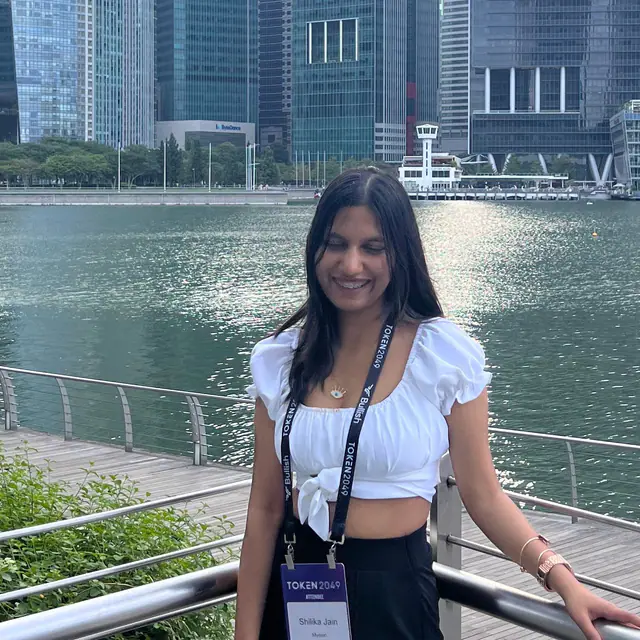
I've done the interview part from the journalist side. In 2024 I spent TOKEN2049 and Solana's conference doing on-ground interviews.
I’d be onground @token2049 & @SolanaConf doing interviews for @cryptodailyuk! Shilika Jain on X, 27 Aug 2024
Doing interviews on the ground teaches you quickly how little time each one takes when the questions are ready, and how much you lose when they aren't. A guest gives you ten good minutes between meetings. If you spend five of them working out what to ask, you get five.
How do you capture talks and interviews without a crew?
Treat each interview like a short booking, not a chat. Agree the slot, send three or four questions in advance, and tell the guest how long it'll take. Book them before the event, the same way you'd book a press or partner meeting.
On the day, keep a simple rhythm:
- Mic the guest, test ten seconds of audio, play it back.
- Ask the questions in the order you sent them.
- End with one open question, such as what surprised them this week. The best clip often comes from that.
- Take one still photo of the guest, with permission, for the post.
- Write down the strongest line and its rough timestamp before you leave the spot.
Interviews also keep working long after the week they're recorded in. That autumn I was still publishing and sharing interviews, including one about zkPass.
was great to interview @Joshua_zkp about @zkPass ✨ Shilika Jain on X, 11 Oct 2024
An interview isn't news, so it doesn't expire with the event. What readers care about is whether the guest said something worth hearing.
For talks, the content is in the argument, not the stage. Capture or request the full recording, then cut the two or three moments where the speaker says something specific. If the talk itself is your main earned-media asset, the companion piece on turning a conference talk into a 30-day earned media campaign covers the press side. This post is about the content you own.
What is the nightly log, and why does it matter?
The nightly log is twenty minutes each evening where the person capturing writes down what they have. It's the habit that separates teams who publish for six weeks from teams who publish once.
Each entry has:
- File name or location
- Who's in it, and whether they consented to publishing
- The single strongest line, written out
- Which content slot it feeds
- Anything that needs a check before it goes out, such as a claim, a figure or a partner's approval
By the end of the week you've got a list you can schedule from. Without it, you'll be scrubbing through hours of footage on the flight home trying to remember which clip had the good answer.
How do you turn one week into six weeks of posts?
This is the capture-to-calendar map I give founders. Each row is a kind of raw material. Each column is where it goes and when.
| Raw capture | Week 1 | Weeks 2 to 3 | Weeks 4 to 6 | Long-term use |
|---|---|---|---|---|
| Founder single-question clips | One clip with a short take on X and LinkedIn | One clip a week, each on a different theme | Remaining clips, tied to news when the topic comes up | Website, sales decks, pitch follow-ups |
| Partner or guest interviews | Short teaser | Full interview published, guest tags and reshares | Pull quotes as text posts | Partner pages, case studies |
| Talk recording | Best 60 seconds | Full talk with a written summary | Clip reused when the topic is in the news | Speaker reel for future applications |
| Written notes and quotes | Founder recap post | A newsletter or blog post built on one argument | An op-ed pitch if the argument holds up | Source material for future posts |
| Photos of real conversations | Recap post | Interview and clip thumbnails | Profile and article images | Press kit, website |
Two rules keep this honest. First, one idea per post. A clip that tries to cover three points gets skipped. Second, each post should stand alone for someone who wasn't there. "What a week at the conference" means nothing to them. "Why wallet teams kept asking about recovery" does.
Platform choice matters too. If your founder is splitting time between channels, my piece on running LinkedIn and X as one founder content system covers which format suits which. For the video side, short video for B2B startups has the editing basics.
When the written material is strong but nobody has time to turn it into finished posts, that's the gap my content writing service fills: the notes come in raw, and the essays and posts go out on schedule.
When is a content capture plan not worth it?
It's a cost, so treat it like one.
- If nobody on the team will publish afterwards, don't capture. Footage without a publisher is just storage.
- If your founder isn't comfortable on camera yet, start with written notes and a recap post. A stiff clip does more harm than no clip.
- If you're there purely for closed-door meetings, filming can make people guarded. Keep the camera away from those conversations and capture only public moments and agreed interviews.
- If the event is small and private, ask the host before filming anything. Some of the best rooms are good precisely because nobody is recording.
The trade-off is time. Capture takes the content seat away from meetings for a few hours each day. If that seat also carries a sales target, decide in advance which one wins.
FAQ
Do we need a videographer for conference content?
Not for most startups. A phone, a clip-on microphone and a plan cover single-question clips, interviews and photos. A videographer starts to make sense for a hosted event you want filmed properly, or if you're producing a polished brand film, and then it's worth budgeting as its own line.
Should we post during the conference or after?
Do both, but weight it towards after. Post a little during the week so people know you're there and can find you. Hold most of the strong material for the weeks after, when the feed is quieter and your clips aren't competing with every other team's recap.
How long should conference clips be?
Short enough to make one point. For single-question clips that usually means under a minute. Full interviews and talk recordings can be longer on YouTube or your site, with short cuts on social platforms that link back to them.
Can we reuse a partner's interview on our own channels?
Only with their consent, and ideally in writing before you record. Tell them where it will appear and whether you'll cut it into clips. Send them the finished pieces before publishing so they can reshare, which is also how the interview reaches their audience as well as yours.
Want a capture plan built around your next event? Book a 30-minute session and leave with a slot list and a six-week release map.
